Pleiades Over Aoraki: A Quiet Convergence of Night, Place, and Purpose
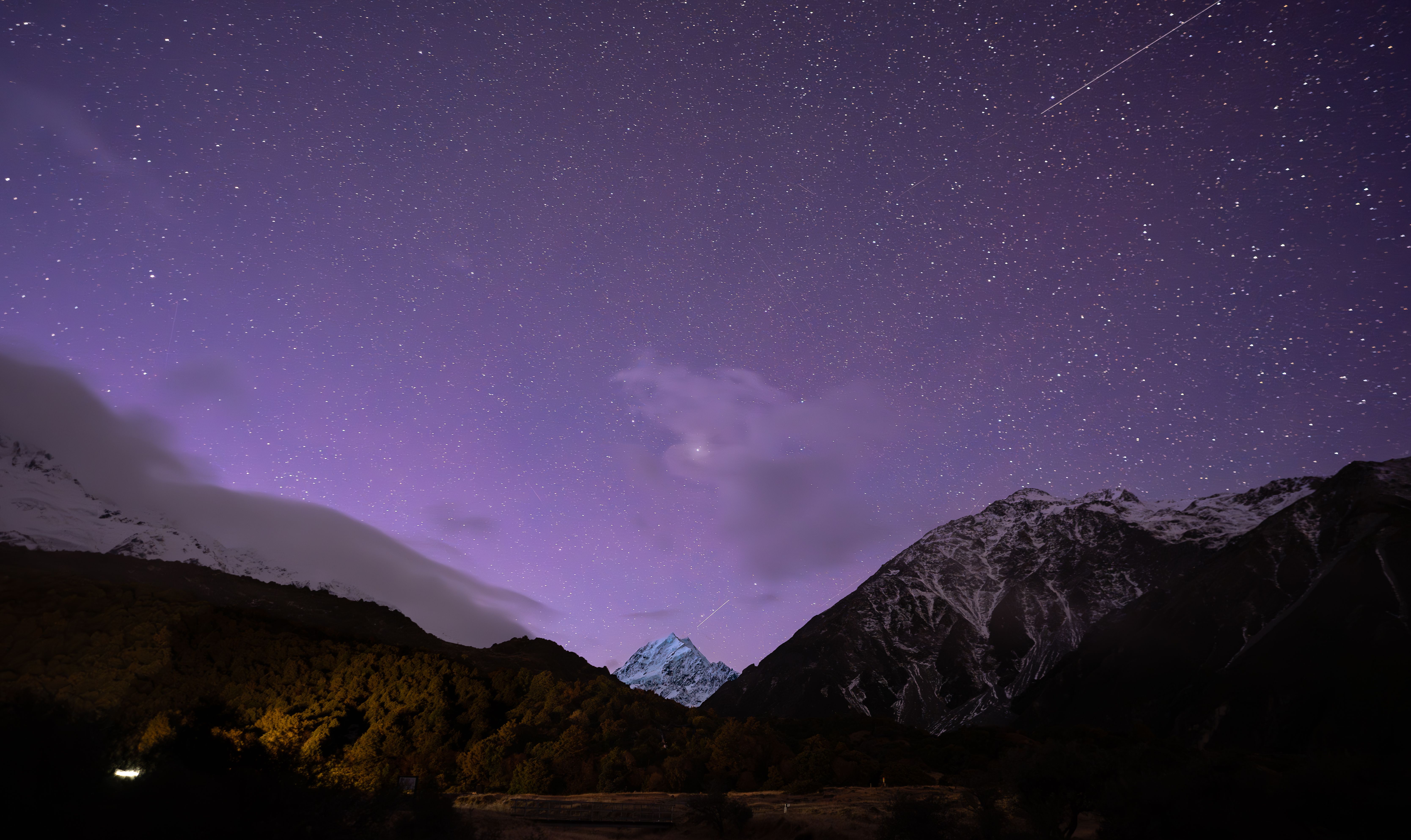
When a single moment aligns—calm water, a window of celestial geometry, and a lens pressed to take in the world—the result can feel almost ceremonial. The photograph of the Pleiades, known in New Zealand as Matariki, above Aoraki/Mount Cook is one such moment: not merely an image, but a small reckoning of time, landscape, and culture. This piece uses that single frame as a doorway into a broader conversation about astronomy in place, the Māori festival of Matariki, and the craft of night photography that makes the invisible moment visible.
A constellation’s quiet majesty, in a landscape that knows its own stillness
Pleiades—the Seven Sisters—has haunted hikers’ maps and stargazers’ skies for centuries. Its light travels across the void for some 440 light-years, a reminder that the heavens are both intimate and distant. In Aotearoa, Matariki has always carried layered meanings: a marker of the mid-winter season, a signal of the harvest’s cadence, and a social invitation to gather, reflect, and renew. To capture Pleiades rising above Aoraki/Mount Cook is to stage a dialogue between a distant cluster and a terrain that is synonymous with endurance and stark beauty.
The photograph in question unfolds during a night of exceptional calm. The still lake becomes a mirror with no distortion, a rare condition that enables reflections to reproduce the sky with the same fidelity as the land. In photography, water is often a partner that tests patience—wind, temperature, and the absence of movement can either flatter or betray. Here, the stillness holds, and the result is a composition where the cluster sits almost as a celestial avatar above the mountain’s silhouette. The photographer notes a five-minute window in which the stars’ alignment and the lens’ focus converge to produce a centered, deliberate framing. Time, thresholds, and precision all converge; a moment in which chance and preparation meet.
From craft to ceremony: Matariki’s cultural resonance
The rise of Matariki heralds more than a season change in the southern hemisphere. It reaffirms a cultural practice that binds families, communities, and generations. The festival invites the living to pause, connect with kin, share kai, and set intentions for the year ahead. In this sense, a night photograph becomes a visual metaphor for Matariki itself: a momentary star-drawn outline of memory, aspiration, and communal identity.
This is not about reducing a living tradition to a picturesque scene; rather, it’s about understanding how landscapes and skies participate in cultural rituals. The mountain, the lake, and the star cluster are not neutral backdrops; they’re actors in a shared story about how people orient themselves in time—seasonal, social, and spiritual. The photographer’s note about NO AI use reinforces a commitment to authenticity—an ethical decision that resonates with Indigenous and non-Indigenous readers alike. It invites viewers to consider how the act of seeing is also a form of respect for the land and the people who have tended these skies for generations.
Technical considerations: light, lens, and the ethics of seeing
The image is credited to a Nikon Z6a paired with a Sigma ART 40mm f/1.4 lens. This setup signals a deliberate balance between light-gathering capability and a field of view that can capture both the star cluster and the mountain’s profile with clarity. The 40mm focal length is close to a “standard” perspective on full-frame bodies: it offers comfortable separation between foreground (Mount Cook) and background (Pleiades) without excessive distortion. The f/1.4 aperture would typically enable impressive low-light performance and shallow depth of field, but in a landscape shot where both the mountain and the star cluster must render sharply, a photographer would likely anticipate stopping down to around f/2.8 to f/4 and focusing carefully at hyperfocal distances. The resulting image would strike a balance: crisp mountaintop edges, star points retained as pinpricks, and a lake surface that serves as a near-perfect mirror.
The decision to capture the scene during a narrow window also speaks to the physics of night photography. The Pleiades cluster is currently around mid-winter in the southern hemisphere, rising in the early night. The window for precise alignment—where the cluster sits directly above the mountain—requires both astrometric accuracy and a calm atmosphere. The photographer’s note about a “small window” underscores the practical realities of celestial photography: timing is as essential as technical competence. Variables such as air stability, atmospheric scintillation, and the precise relative motion of celestial bodies all constrain what is possible in a single frame.
A practical workflow for a similar shot
- Scout and plan: Use star-tracking apps or planetarium software to identify when Pleiades will align with the target landscape. Consider any intervening weather or moonlight that could wash out star points.
- Equipment choices: A robust camera with good high-ISO performance, a stabilized tripod, and a lens offering both wide coverage and sharp edges. A mid-wide focal length (roughly 35–50mm on full-frame) provides a comfortable view that includes the peak and the sky without excessive perspective distortion.
- Exposure strategy: Begin with a base exposure to capture star color and detail, then bracket to ensure the mountain’s silhouette isn’t crushed in shadow. A careful balance between ISO, shutter speed, and aperture preserves star clarity while maintaining scene realism.
- Focus discipline: Use live view magnification on a bright star or distant light to lock focus, then switch to manual focus to prevent drift.
- Post-production discipline: Subtle stacking or noise reduction can help when dealing with thermal noise from long exposures, but the aim should be to retain the natural star fields and the lake’s reflective integrity. Gentle color grading can help unify the sky and the landscape without crossing into over-saturation.
Beyond aesthetics: what this frame can teach about observation and imagination
- Observational rigor meets reverence: The decision to time a shot around a rare alignment embodies a blend of empirical planning and a willingness to be surprised by what the night reveals. The discipline of astrophotography—checking gear, reading the sky, and calibrating for meteorological quirks—must be paired with an openness to the scene’s emergent beauty.
- The landscape as a canvas for astronomy: When a mountain is placed beneath a constellation, it prompts viewers to think of the Earth’s surface as a stage for cosmic scales. This juxtaposition can deepen public interest in astronomy and in the cultural significances attached to the sky.
- Cultural storytelling through light: Matariki’s rise is not merely a natural phenomenon; it carries a social narrative. The photograph becomes an invitation to reflect on how communities interpret celestial cycles and translate them into shared rituals, recipes, and resolutions.
Beyond the frame: what the future might hold for images of Matariki and Aoraki
- Technological evolution: As camera sensors improve and computational photography matures, nightscape photography could become even more accessible without sacrificing nuance. Enhanced dynamic range will allow deeper shadows in the mountains to retain texture while preserving the brilliance of star points. Automated alignment of star fields with landscapes could facilitate more precise compositions, expanding the repertoire of scenes that are photographically viable in a single frame.
- Photographic ethics and authenticity: The explicit note about not using AI in the creation of the image touches a broader debate about authenticity in visual media. As tools evolve, photographers may increasingly articulate their processes to maintain public trust. The ethical framing of original capture versus post-production manipulation will likely become a standard part of professional practice.
- Climate and visibility: In Aotearoa’s diverse climates, the frequency of perfect reflections and clear skies may shift with weather patterns. The patience to wait for rare conditions will remain essential, but photographers may also increasingly rely on long-term environmental data to predict the best nights for such mirrored moments.
A closing reflection: why this photograph matters
More than a pretty composition, the Pleiades over Aoraki/Mount Cook encapsulates a rare convergence of science, landscape, and culture. It reminds us that the night is not a void but a vessel—a space where distant star clusters become intimate mentors, guiding observers toward a deeper appreciation for time, place, and community. The image invites a reader to pause, look outward, and consider how seasonal rituals like Matariki weave together memory, aspiration, and shared responsibility for the future.
If you are drawn to this kind of moment, here are a few questions to carry forward:
- How do the skies you photograph reflect (and refract) your relationship with the land you shoot?
- What cultural or personal rituals accompany your engagement with the night—breathing with the stillness, mapping the heavens, sharing the moment with others?
- In a world of rapid image production, what responsibilities do we bear as viewers and makers to ensure authenticity, context, and respect for the places we depict?
The night of calm, the stars in alignment, and a lake that mirrors both mountain and myth together offer a quiet argument: that some of the most meaningful experiences happen when observation, intention, and place meet in a fleeting, well-timed moment. In that instant, Pleiades becomes more than a cluster—it becomes a compass, pointing us toward a richer understanding of nature, tradition, and the art of seeing well.