Mars at Close Range: How Perseverance Reframes Ourstride into the Solar System
The July 2020 landing of NASA’s Perseverance rover marked more than a successful spaceflight moment. It signified a deliberate pivot in planetary science and exploration—the move from remote observation to technologically immersive, sample-return–dreaming missions. Below the surface drama of thrusters, parachutes and sky-cranes lies a broader narrative: how a single robotic mission can alter our sense of what is possible, what we know about Mars, and how we pursue ambitious, interdisciplinary science in the 21st century.
A mission built on a century of precedent, Perseverance nonetheless represents a new phase in planetary exploration. It inherits the wisdom of earlier landers and rovers—the Moon landers of Apollo, the twin Mars rovers Spirit and Opportunity, and the Curiosity rover—but it also injects an elevated scientific ambition and a more integrated, end-to-end approach to exploration. The rover is not merely a mobile laboratory; it is a node in a broader system designed to enable future sample return and, potentially, human exploration. That shift matters, because it reframes Mars research as a pipeline rather than a single mission.
Engineering the landing: a case study in operational reliability under planetary uncertainty
Landing on Mars remains one of engineering’s most demanding challenges. Perseverance’s descent combined several novel and time-tested technologies designed to withstand the unique Martian atmosphere and the 300-million-mile logistical challenge of conveying a craft that must perform autonomously. In broad strokes, the sequence began with cruise stage corrections, then a guided entry into the thin Martian atmosphere, followed by the heat shield’s protective embrace and the intricate choreography of a landing system that culminates with a rocket-powered descent, a sky-crane maneuver, and a final touch down on wheels.
What makes Perseverance remarkable from an engineering standpoint is not merely that it landed; it’s how it landed, when it landed, and what that implies for future missions. The mission validated, in practical terms, a layered approach to planetary descent: heat shield performance, supersonic braking, parachute stability, powered descent, and fine control in the last meters of touchdown. Each subsystem had to perform not in isolation but as a tightly coordinated ensemble under a single timing regime. The engineering takeaway is subtle but profound: successful planetary landings require layered redundancy, autonomous decision-making, and robust pre-mission testing that translates into real-world resilience.
Science goals: from geology to astrobiology by way of astrodynamics
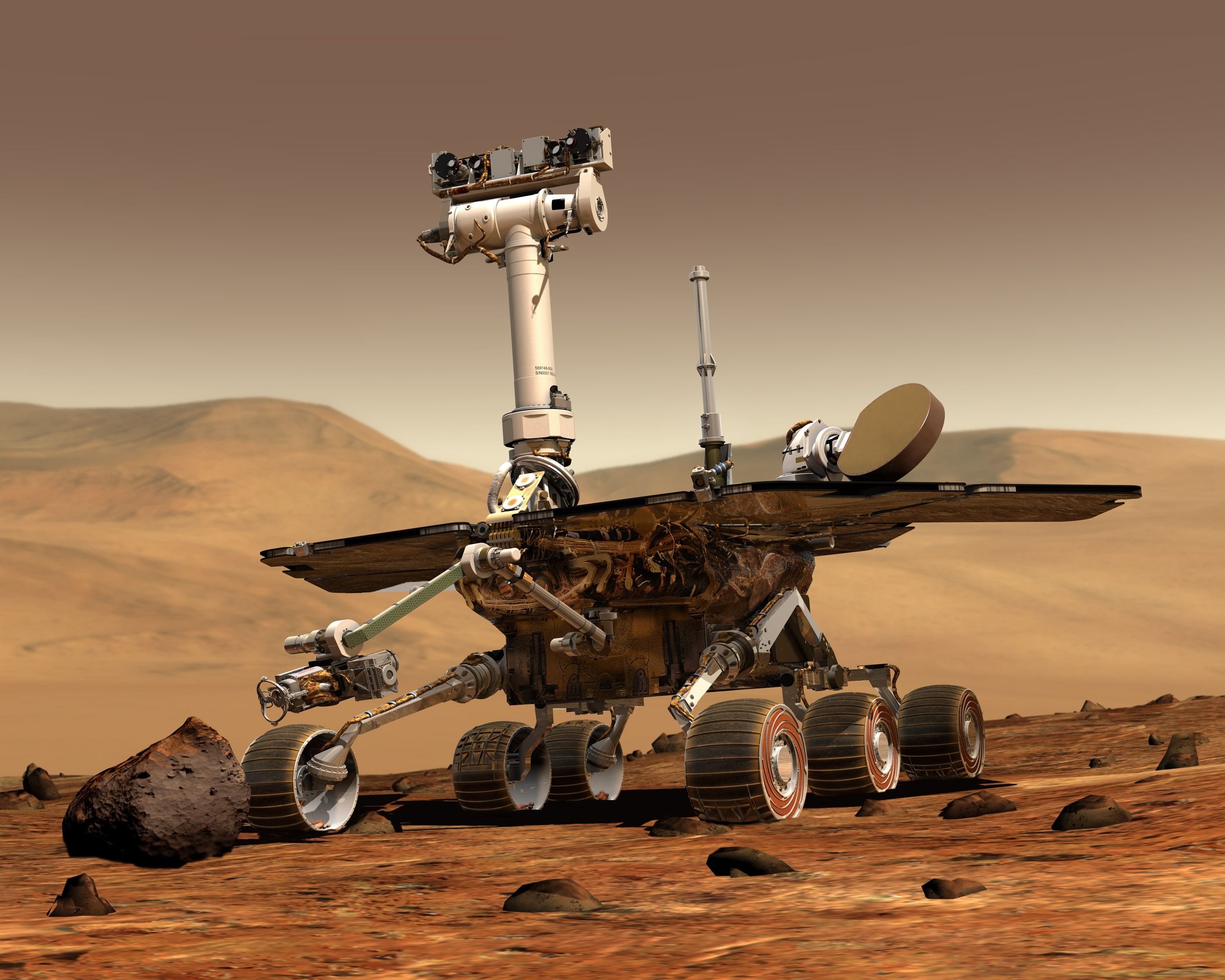
Perseverance is a geologist’s compass and a systems engineer’s dream. Its primary raison d’être is more than locating past life indicators or collecting samples. It is to catalog Mars’ geologic history with a level of detail and context that enables scientists to reconstruct the planet’s environmental evolution. The rover’s eight-foot-tall frame houses an array of instruments designed to characterize mineralogy, chemistry, and past habitability, while its onboard geology tools allow for high-resolution stratigraphic mapping of Jezero Crater—the site chosen because it preserves ancient deltaic environments that could record habitable conditions from Mars’ distant past.
Central to Perseverance’ s mission is the Sample Caching System (SCS), a bold step toward the future sample-return architecture. A precursor to the infrastructure necessary for retrieving and returning Mars samples to Earth, SCS embodies a modular approach: deposit, store, and preserve samples in sealed cores for eventual retrieval by a subsequent mission. This is not mere “collect and cache”; it is an investment in a multi-mission pipeline designed to maximize scientific yield while maintaining sample integrity across time and distance. The practical implications are significant: the existence of a curated, Earth-based analysis backbone for Martian material would enable high-precision measurements that are currently impossible from orbit or rover-mounted labs alone.
The mission also carries a suite of environmental and meteorological sensors, enabling a richer understanding of Martian climate and atmospheric dynamics. These data streams are more than numbers; they contextualize Mars as a dynamic system, not a static backdrop to human curiosity. The science program illustrates a broader trend in planetary exploration: instrumentation designed for an integrated, cross-disciplinary science return, where geology, chemistry, atmospheric science, and astrobiology inform one another.
The human dimension: collaboration, risk, and the politics of ambition
Space exploration is frequently described as a planetary-scale enterprise, yet Perseverance illustrates the intimate scale of collaboration required. The mission’s success rests on a symphony of teams across NASA centers, international partners, aerospace contractors, and academic scientists. It is a reminder that modern space exploration is as much about management of risk, scheduling, and supply chains as it is about the mechanical parts that eventually rest on Martian soil.
Equally instructive is the ethical and strategic calculus surrounding sample return. The decision to pursue Earth-based analysis for Martian materials invites questions about planetary protection, contamination control, and the timeline for human exploration. The governance of such a pipeline—who oversees what, when, and how—is a quiet but essential dimension of the science, ensuring that discovery remains credible, safe, and scientifically valuable.
A culture of discovery in public-facing science
Perseverance has also served as a powerful public storytelling device. The early, candid images of the surface, the “Firsts” that accompanied the lander’s touchdown, and the promise of audio from Mars have captivated lay audiences and inspired younger generations to consider careers in science, engineering, and the wider aerospace ecosystem. The post-landing images that circulated—engineered visuals and early surface photography—demonstrate how the translation of complex, lab-bound work into accessible public content is a non-trivial component of modern science communication. It is worth noting how the cadence of updates, the transparency about challenges, and the provision of interim results can cultivate trust and sustained interest—the social fabric that supports long-cycle, high-investment endeavors.
What Perseverance teaches about risk and realism in ambitious science
Ambitious scientific programs frequently tempt institutions to pursue highest-risk, highest-reward configurations. Perseverance embodies a calibrated refusal of reckless escalation. The mission demonstrates how to balance bold objectives with a rigorous, modular architecture that allows for measured risk. For practitioners in other fields—climate science, biomedical engineering, or data-intensive research—Perseverance offers a blueprint: identify where risk is acceptable, design redundancy, and maintain an adaptability that permits re-scoping when new information demands it.
The future: from cache to return, from Mars to public science policy
Looking forward, Perseverance is not an endpoint but a keystone. The broader strategy—sample caching, eventual retrieval, and analysis on Earth—reframes Mars as a repository of secrets unlocked through a sequence of investments across multiple missions. The practical challenges remain: ensuring sample integrity across the interplanetary journey, developing robust contact-based and contactless curation methods, and coordinating international participation in a shared scientific enterprise.
In parallel, the mission’s data and its public-facing outputs are teaching us how to communicate and collaborate at scale. The integration of engineering imagery, high-fidelity simulations, and accessible narrative content helps create a culture where technical excellence does not come at the expense of public understanding. The future will bring more complex, more expansive missions, and Perseverance stands as a prototype for how to balance scientific audacity with operational discipline.
A closing reflection: what this means for readers and practitioners
For readers, Perseverance invites a more nuanced appreciation of what it means to explore other worlds. It is not simply about achieving a landing or collecting samples; it’s about creating an interoperable, future-facing framework for discovery. For practitioners—engineers, scientists, policymakers, educators—it offers a blueprint for how to conceive, design, and manage projects that are technically demanding, scientifically ambitious, and socially resonant.
If you are tasked with planning a complex project in a resource-constrained environment, consider Perseverance a case study in:
- Building layered redundancy and autonomous operation into mission-critical systems.
- Designing for future reuse and scalability, recognizing that today’s mission may be the seed for tomorrow’s larger enterprise.
- Framing scientific questions within a pipeline that connects hypothesis, measurement, sample preservation, and Earth-based analysis.
- Communicating uncertainty and progress honestly to sustain public trust and stakeholder engagement.
A page in the handbook of planetary exploration, Perseverance is also a reminder that our most meaningful scientific ventures are collective epicenters: they weave together engineering, geology, atmosphere, policy, education, and imagination. They are not isolated achievements but milestones on a longer human journey to understand our place in the solar system.
Notes on the practicalities: what to watch for next
- High-resolution imagery and video: the landing sequence has already yielded dramatic engineering stills; the best is yet to come in full-resolution, scientifically annotated media.
- In situ analyses: elemental and mineralogical data will sharpen narratives about Mars’ habitability and climate history.
- Sample caching progress: the (anticipated) demonstration of sealed cores and their storage will inform eventual sample-return mission design.
- Public engagement: as the mission matures, expect more immersive storytelling—interviews with the scientists, simulations of the descent, and educational resources that translate complex science into actionable knowledge for classrooms and communities.
For readers who crave technical specifics, Perseverance embodies a convergence of engineering prowess, planetary geology, and strategic mission planning that will influence how future interplanetary missions are conceived, funded, and executed. It is, in short, a turning point: not merely for Mars exploration, but for how humanity approaches the grand enterprise of science itself.