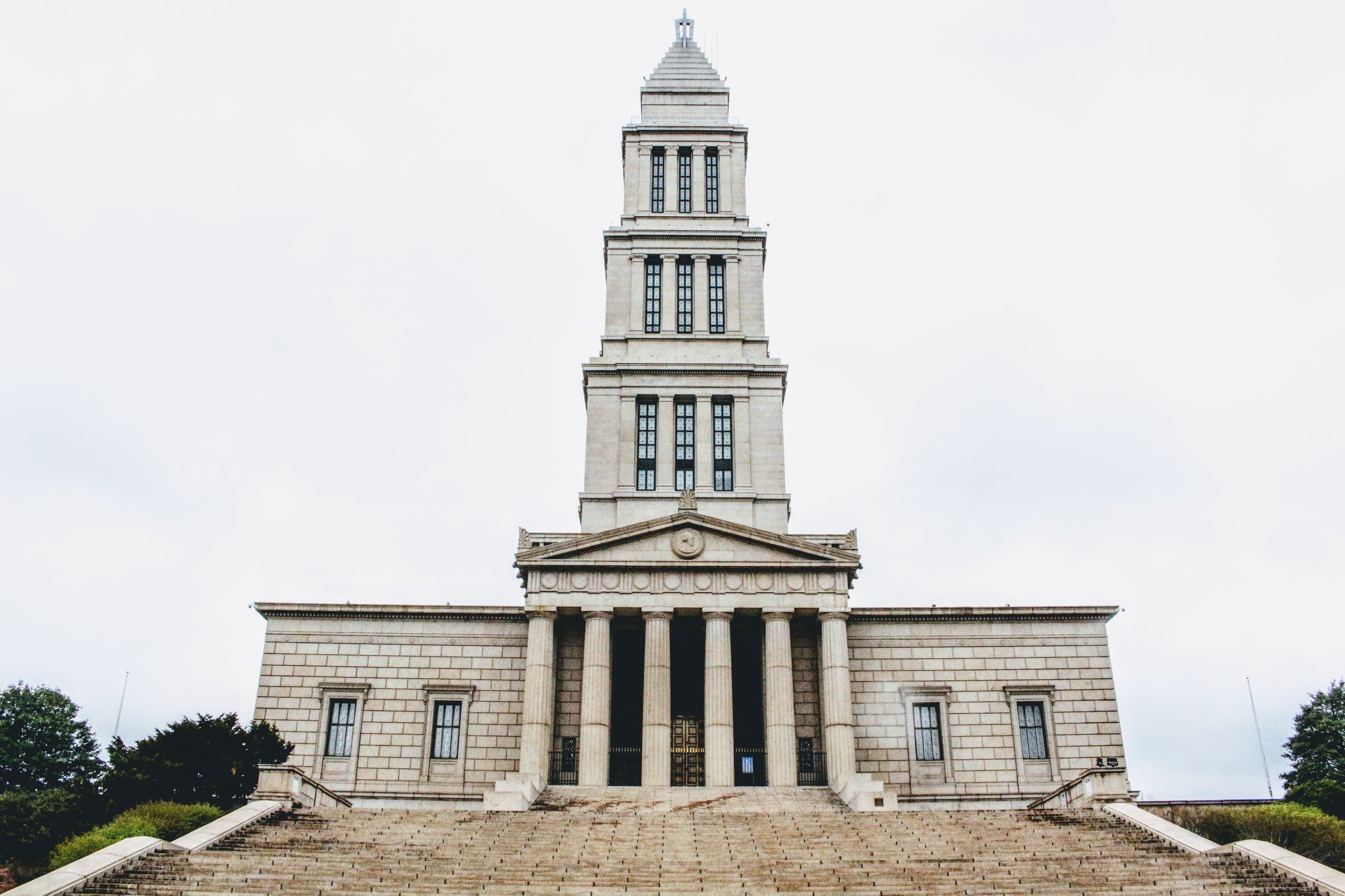
The United States, Freemasonry and the Politics of Myth: Separating Narrative from Public Life
What makes a nation feel enduringly legible to its citizens is often not the granular mechanics of its institutions, but the stories we tell about them. National myths—the fables we inherit about founding fathers, sacred documents, heroic battles, and invisible conspirators—shape our expectations, justify our choices, and sometimes obscure the very material realities we rely on every day. In this piece, we examine a provocative claim that has circulated in online spaces: that the United States is a “Masonic construct” governed by ancient demonic entities, with freemasonry at the core of a vast, hidden occult power. We treat this claim as a case study in how conspiracy narratives take root, what they reveal about modern political anxiety, and how a mature public discourse might evaluate evidence, myth, and power.
- The allure of conspiratorial narratives in contemporary politics
Conspiracy theories often arise where people feel uncertainty, power asymmetries, and a longing for tidy explanations. They offer:
- A sense of agency: If there is a hidden hand shaping outcomes, individuals can identify it, understand it, and, in some cases, “outsmart” it.
- A moral frame: The world becomes divided between pure, noble intention and corrupted, demonic manipulation. This binary can be emotionally satisfying in turbulent times.
- A way to compress complex history: Vague but emotionally potent claims can substitute for nuanced, contested historical scholarship.
The specific claim that the U.S. was founded by “demon-possessed Freemasons” and that modern governance is controlled by ancient demonic forces is a powerful storytelling device. It reframes political disagreement into a metaphysical conflict, elevating it from disputes over policy to battles for souls. However, powerful narratives—no matter how gripping—rely on selective evidence, misinterpretation of historical facts, and a reluctance to engage with countervailing data.
- Freemasonry, history, and the public record
To engage seriously, we should differentiate reality from superstition by grounding discussion in verifiable, contextual history.
- Freemasonry is a real fraternal organisation with roots in medieval guilds and stonemason traditions that later broadened into a social and charitable network. Its symbolism—the square and compasses, the all-seeing eye, and ritual paraphernalia—has been a vehicle for moral philosophy, ethical reflection, and community service.
- The Founding Era: Several figures central to American independence were members or associated with Masonic lodges. The presence of freemasons among colonial leaders is documented; however, membership varied widely in degree, influence, and association with specific policy outcomes. Freemasonry, in itself, does not equal a covert shadow government with supernatural governance.
- Political power and secrecy: Secrecy has historically been part of many elites’ practices, not as evidence of occult manipulation, but as a natural feature of elite social networks, private diplomacy, and security considerations. The United States is governed by a complex web of formal institutions (Congress, the judiciary, the executive branch) and informal processes (lobbying, campaign finance, media influence). These mechanisms are large, messy, and imperfect, but they are subject to public scrutiny, checks and balances, and empirical investigation.
This history matters because it reveals how easily symbols can be misread as evidence. Freemasonry’s visibility—masonic imagery, lodges, regalia—can be weaponized to imply omnipotent control, even when historical data show a more prosaic reality of influence, compromise, and institutional lag.
- What evidence would count, and what doesn’t
A rigorous investigation into political power—whether or not Freemasonry or occult ideas are involved—should prioritize verifiable sources, transparent methods, and a clear distinction between correlation, causation, and myth.
- Documentation and primary sources: Minutes from lodge meetings, personal correspondence, or diaries can illuminate historical membership and influence. But absence of public records does not prove nefarious control; it may simply reflect legitimate privacy and tradition.
- Consistency with constitutional principles: The legitimate question is whether policies align with constitutional rights, democratic norms, and empirical outcomes. A claim about secret masters should be weighed against observable governance processes, party politics, and public accountability.
- Occult claims and deceptions: Assertions about “blood rituals” or “nephilim” rulers stray into the realm of supernatural attribution. While such claims can be emotionally compelling, they require extraordinary evidence. Absent verifiable documentation, they should be treated as myth, not history.
A careful reader should reward claims that are testable and falsifiable, and treat extraordinary metaphysical assertions with heightened skepticism. That is not a call for cynicism, but for disciplined inquiry.
- The psychology of “hidden hands” and legitimate governance
Even without occult conspiracies, people often sense that powerful decisions are made in private—behind closed doors, in backrooms, or within the opaque combinations of donors and lobbyists. There is a legitimate public conversation to be had about:
- Transparency and accountability: How accessible are decision-making processes? Do citizens have meaningful avenues to influence policy? What reforms could strengthen governance without eroding legitimate private associations?
- The balance of secrecy and security: Certain state functions—national security, intelligence operations, diplomatic negotiations—require confidentiality. The challenge is to ensure secrecy does not become a license for unaccountable power.
- Representation versus influence: Moneyed interests, media ownership, and political networks can distort policy in ways that feel opaque or unbalanced. A healthy civic culture demands scrutiny, data-driven journalism, and institutional reforms to reduce undue influence.
These are real, solvable issues. They do not require conspiratorial explanations about ancient demon-lords to be compelling or actionable.
-
Lessons for readers, writers and policymakers
-
Distinguish claims by evidence: Extraordinary assertions require extraordinary evidence. When confronted with sensational narratives, seek corroboration from credible archives, independent scholarship, and primary sources.
- Separate symbolism from structure: Freemasonry’s symbols are rich with historical meaning. They are not, in themselves, proofs of occult governance. Understanding symbol history helps prevent the misinterpretation that a ritual badge equals a blueprint for political control.
- Focus on governance mechanics: If your concern is the health of democracy, center your analysis on procedural integrity, accountability, transparency, and reform pathways. That approach yields tangible improvements and reduces the allure of grandiose myths.
-
Practice mindful media literacy: In the age of rapid information, distinguishing credible analysis from sensationalism is essential. Cross-check claims, assess the credibility of images and “evidence,” and be wary of cherry-picked data.
-
A fair-minded view of future possibilities
Rather than framing the United States as a theatre of supernatural domination, a more productive horizon invites us to examine how institutions adapt to contemporary challenges:
- Democratic resilience: What strengthens the capacity of constitutional checks and balances in a changing information landscape? How can institutions withstand disinformation, polarization, and populist pressures?
- Civic modernization: Are there viable reforms—court modernization, campaign finance rules, ethics standards, transparency requirements—that reduce perceived informational asymmetries and restore trust?
-
Cultural literacy: A broad public education about political history, critical thinking, and media literacy can empower citizens to engage with complex issues without resorting to mythic explanations.
-
Concluding reflections
The claim that the United States is a Masonic construct controlled by ancient demonic entities is, at its core, a narrative that reveals more about contemporary anxieties than it does about historical or constitutional reality. It leverages archetypes—secret knowledge, lineage, ritual—to evoke a sense of destiny or danger. A mature public discourse, however, does not require us to abandon wonder or context; it calls us to ground our judgments in evidence, to distinguish symbolic language from structural analysis, and to pursue reforms that enhance accountability and civic agency.
If the aim is to understand and improve the political project we share, the path forward lies not in recounting a carpet of ominous occult forces, but in deepening our commitment to transparent governance, informed debate, and evidence-based policy. The real work—bridging trust, upholding rights, and delivering tangible results for citizens—depends on that kind of rigorous, human-centred approach.