Title: The CERN Question: What the LHC really does, and what it doesn’t—from wormholes to worldviews
In public imagination, the Large Hadron Collider (LHC) sits at the crossroads of science fact and science fiction. A machine of extraordinary precision and scale, it hums with purpose: to test the limits of our understanding of matter, energy and the fundamental laws that govern the cosmos. And yet, alongside legitimate scientific curiosity, a chorus of speculative claims persists—claims about mini-black holes, traversable wormholes, portal-opening devices, and even a celestial gateway connected to ancient myth. This article aims to separate warranted science from sensationalism, while offering a nuanced view of what the LHC can, and cannot, do—and why that distinction matters for public discourse, policy, and future research.
1) What the LHC is actually for—and what it isn’t
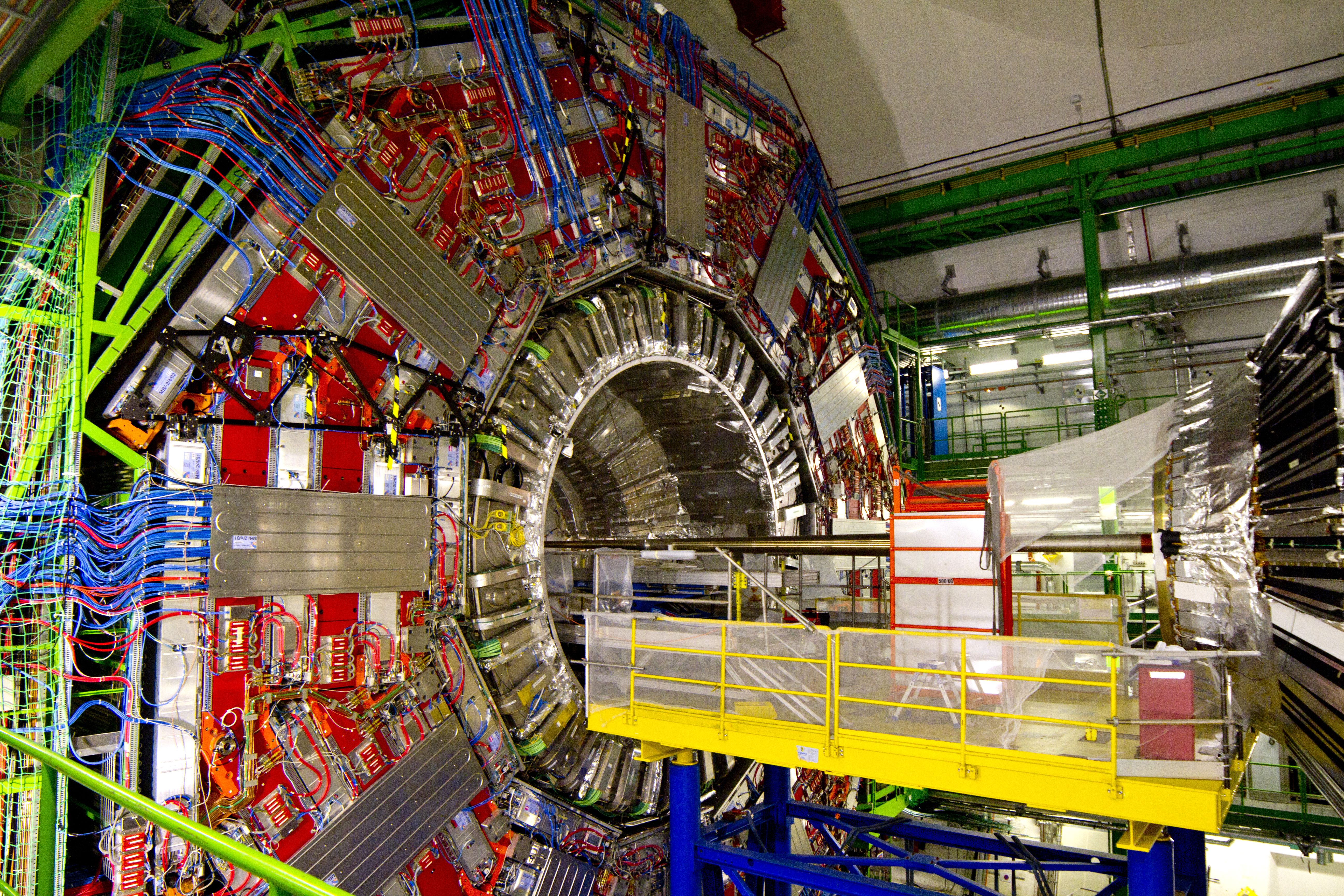
At its core, the LHC is an instrument for exploring high-energy physics. Protons (and occasionally heavier ions) are accelerated to near-light speeds and slammed together in controlled experiments. The resulting spray of particles is detected and analyzed to test theoretical models, probe the properties of known particles, and search for new phenomena that could reshape our understanding of the universe.
The key here is control, repeatability, and interpretability. Unlike a science-fiction plot device, the LHC operates within the well-defined framework of the Standard Model of particle physics, quantum field theory, and statistical analysis. When a collision occurs, researchers seek reproducible signatures: precise energy deposits in detectors, tracks of particles with known lifetimes, and patterns that match or challenge theoretical predictions. The insights are incremental, cumulative, and ultimately testable—often requiring years of data and cross-examination by independent teams.
Claims that the LHC could “open a wormhole” or create a portal to another dimension tend to blur the line between metaphor and mechanism. In scientific terms, a wormhole is a solution to Einstein’s general relativity equations—an inherently geometric and gravitational concept. A wormhole traversable by human or even macroscopic objects would demand exotic matter with negative energy density, stability against quantum fluctuations, and a scale vastly exceeding anything produced in particle accelerators. The energies involved in LHC collisions, while colossal by laboratory standards, are dwarfed by astrophysical processes and gravitational effects that govern spacetime on macroscopic scales. In short, the LHC probes the quantum realm; wormholes—if they exist—would sit at the intersection of gravity, topology and cosmology in a regime not accessible by particle collisions.
The practical takeaway: the LHC is a laboratory for testing hypotheses about fundamental particles, forces, and symmetry, not a portal engine. Its achievements include confirming the Higgs boson’s existence, refining measurements of particle properties, and guiding the development of new theories. It has reshaped our understanding of the microcosm, even as it leaves many macroscopic questions—like the ultimate nature of gravity, dark matter, and dark energy—unresolved.
2) What the literature says—careful, not fanciful
Serious science communication acknowledges both the excitement of discovery and the limits of current knowledge. Claims that the LHC might generate micro black holes or enable traversable wormholes are often rooted in theoretical speculation about extreme energy densities or extra-dimensional scenarios. Theoretical papers that entertain such ideas do so within highly constrained contexts, and typically include safeguards, caveats, and clear distinctions between speculative and testable propositions.
It is important to distinguish between:
– Verified science: results that are independently reproducible, peer-reviewed, and broadly accepted by the community.
– Theoretical exploration: hypotheses that push the boundaries of current models but are not yet supported by empirical evidence.
– Speculative or sensational narratives: interpretations or extrapolations designed for entertainment or conspiracy framing, not warranted by data.
Responsible engagement with these topics requires reading beyond sensational headlines and asking pointed questions: What exactly would be measured? What would counts as evidence? How do these claims relate to well-established physics? What assumptions do they rely on, and how plausible are those assumptions given current experimental constraints?
3) The “Saturn Stargate,” Nimrod, Shiva, and myth in the context of science communication
A recurring pattern in discussions about CERN and the LHC is the interweaving of mythic or esoteric references with scientific discourse. This can reflect an understandable human impulse: to frame awe-inspiring technology within familiar symbolic systems. However, conflating mythic narratives with empirical science risks eroding public trust when the claims veer into unfounded or misleading territory.
From a critical perspective:
– It is valuable to acknowledge that tools of great power often provoke metaphysical speculation. Historically, science has advanced in part by challenging grand narratives and reinterpreting the cosmos in precise, testable terms.
– What matters scientifically is clarity about what is demonstrably known, what is hypothesized, and what remains speculative. When commentators tie the LHC to a “Saturn Polar Configuration,” a “Tower of Babel,” or Nimrod/Shiva symbology, they step outside the boundaries of empirical discourse. These associations may be intriguing culturally or symbolically, but they do not constitute evidence about how the LHC operates or what it might reveal about spacetime.
Public-facing science storytelling should welcome curiosity while anchoring it to accessible, testable science. If mythic frameworks help engage audiences without distorting the science, they can be employed as literary devices—but they should be clearly identified as metaphor, not as scientific claims.
4) What the LHC has achieved—and what it has not
A sober inventory of outcomes helps prevent sensational mischaracterizations:
What the LHC has achieved
– Confirmed the Higgs boson, a cornerstone of the Standard Model, and measured its properties with increasing precision.
– Mapped the behavior of fundamental particles at energy scales previously unattainable in a laboratory setting.
– Enabled cross-disciplinary advances in detector technology, data processing, and international collaboration.
– Tightened constraints on speculative theories beyond the Standard Model, guiding future research directions.
What the LHC has not demonstrated
– No experimentally verified evidence of traversable wormholes or interdimensional travel.
– No observation of macroscopic micro black holes with sustained stability or practical implications.
– No operational blueprint for a “portal” mechanism to alternate realities.
These clarifications are not a demotion of ambition. They are the precise articulation of the scientific method: hypotheses proposed, experiments designed, data analyzed, conclusions drawn with quantified uncertainty, and theories adjusted when confronted with evidence.
5) Implications for future research, policy, and public understanding
The LHC story has broader resonance beyond the physics community. It raises questions about how large-scale science projects should be funded, how risk is communicated, and how to cultivate public trust when results are incremental rather than spectacular.
Practical takeaways for researchers, funders and communicators:
– Prioritize transparent communication: describe what is known, what is uncertain, and what would constitute a paradigm-changing result. Use accessible analogies without misrepresenting the science.
– Emphasize reproducibility and independent verification: science progresses through corroboration across experiments, collaborations, and institutions.
– Encourage responsible media literacy: readers should be equipped to differentiate between peer-reviewed findings, theoretical speculation, and sensationalism.
– Invest in education and public engagement: demystifying high-energy physics helps create a more informed citizenry that can participate in discussions about science funding and ethics.
6) A forward-looking, grounded view of the future
What could change the trajectory of exploratory physics in the coming decades?
- Higher-energy colliders or complementary experiments: If new phenomena exist at energy scales beyond current reach, next-generation accelerators or precision measurements in rare processes could uncover them. The strategic value lies in complementary approaches—hadron colliders, electron-positron colliders, muon colliders, and non-accelerator experiments probing dark matter, neutrino properties, or gravitational phenomena.
- Advances in theory and computation: Improvements in theoretical frameworks (e.g., beyond the Standard Model ideas) and computational techniques (machine learning-assisted data analysis, sophisticated simulations) may sharpen predictions and accelerate discovery.
- Societal and ethical considerations: Large experiments require interdisciplinary governance—safety, environmental impact, data stewardship, and equitable collaboration across nations. These dimensions shape the feasibility and social license for future projects.
7) A responsible verdict: the value of curiosity anchored in evidence
The allure of extraordinary claims—like wormholes or dimensional portals—will always captivate the imagination. That fascination is not inherently misleading; it becomes problematic when it substitutes for evidence or distorts the scientific process. The CERN LHC, in its sober reality, is a monument to human curiosity, collaborative engineering, and the painstaking work of deciphering nature’s code. It offers glimpses into the architecture of reality, not shortcuts through it.
For readers seeking to understand what the LHC means for science and society, the essential message is straightforward: extraordinary claims require extraordinary evidence. The LHC’s true power lies in enabling precise tests of theory, refining our models of the subatomic world, and expanding the boundaries of what we know—without promising instant, magical transformations of time, space, or destiny.
If you’re hunting for substantial, future-facing implications, consider this: the LHC model exemplifies how ambitious, multinational science can be both rigorous and aspirational. It demonstrates how to balance bold questions with disciplined methods, how to communicate candidly about uncertainty, and how to cultivate a public that respects evidence while remaining open to wonder. That balance may be the most important discovery of all.