Title: The Hidden Observatory: What to Do When You Finder an Abandoned Telescope on Campus
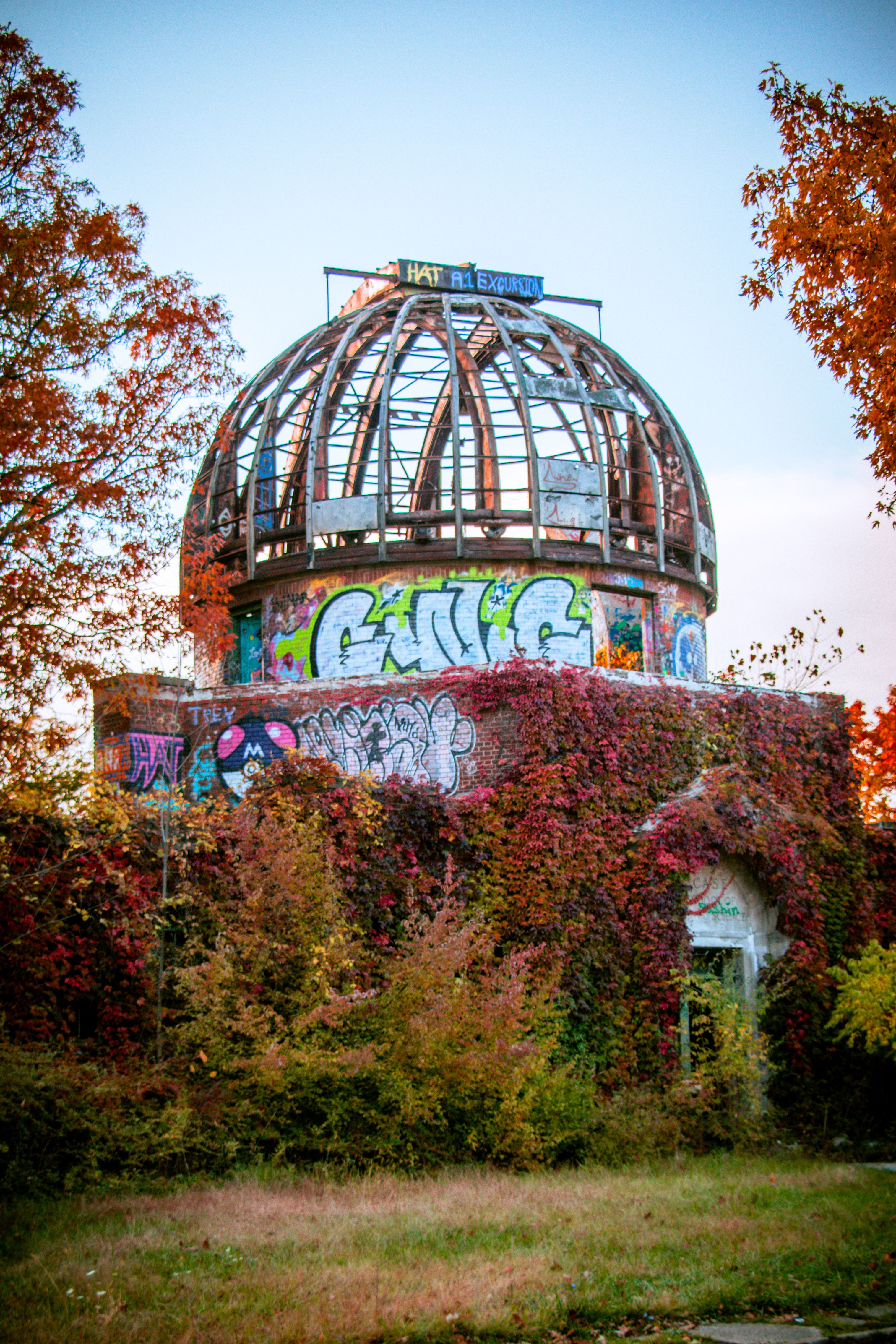
On many university campuses, the architecture of learning hides more than it reveals. Often, behind the façades of lecture halls and research facilities lie forgotten rooms, dusty relics, and stories that speak to past ambitions, private gifts, and the slow drift of institutional memory. The Reddit post that follows—an earnest student-turned-IT professional discovers an abandoned observatory housing a Celestron 16 telescope, untouched since the late 20th century—reads like a microcosm of broader questions: how should institutions steward scientific heritage, what are the practical steps to responsibly salvage a time capsule, and how can curious individuals contribute without overstepping?
This article uses that starting point to explore the practical, ethical, and strategic dimensions of discovering an abandoned scientific instrument on campus. It moves from situational assessment to a thoughtful action plan, drawing on best practices in collections stewardship, project management, legal considerations, and community engagement. It’s an editorial examination of not just what to do, but why doing it well matters.
Part I: Why an Abandoned Observatory Matters
Historical and educational value
– Abandoned instruments are more than dusty gear; they are artifacts that illuminate the material culture of science. A Celestron 16 telescope, particularly if it bears a provenance tied to a 1970s–1980s funding gift, embodies the material ambitions of its era: the democratization of astronomy, the role of donors in advancing public science, and the campus culture of hands-on learning.
– Preserving such objects provides tangible connections for students, researchers, and alumni. It can inspire discussions about the evolving landscape of instrumentation, from analog film and manual mounts to today’s digital, automated systems, and open data ecosystems.
Cultural and institutional memory
– Rooms that become “time capsules” often reflect governance gaps: vanished documentation, dispersed responsibilities, and shifting priorities. Restoring or documenting what exists can clarify how decisions were made, who funded what, and how a university’s science programs developed.
– The act of stewardship itself communicates values—respect for legacy, curiosity, and a willingness to invest in the long arc of learning—qualities that institutions wish to signal to students and the community.
Part II: Framing the Decision: Questions to Ask Before Acting
1) What is the current condition and risk?
– Physical risk: dust, mold, bird feces, and insect remnants create health hazards. Structural concerns (rotting wood, webbing) can compromise both safety and the telescope’s mechanical integrity.
– Environmental risk: unsealed optics and components are vulnerable to humidity, temperature fluctuation, and pests. The longer it sits, the higher the likelihood of irreversible damage.
2) What is the telescope’s provenance and potential value?
– If the telescope is a 1969 Celestron 16, it sits within a historically significant lineage of amateur and semi-professional astronomy equipment. The value is not purely monetary; it includes educational utility, historical interest, and potential donor or alumni engagement.
3) Who should be involved?
– Core stakeholders often include: the department or faculty responsible for the building, the facilities management team, the university’s archives or museum studies unit, risk and safety officers, and, where feasible and appropriate, donors or alumni with memory or interest in the instrument.
– A respectful, participatory approach helps avoid missteps and ensures proper documentation.
4) What are the legal and safety constraints?
– Access controls, liability, and campus policies govern entry into unmarked or restricted spaces. Any remediation or handling of the instrument should comply with occupational safety regulations, building access policies, and potential environmental hazards.
5) What are the potential paths forward?
– Documentation and preservation without activation (cataloging, photographing, and stabilizing conditions).
– Restoration and upcycling as an educational resource (restoration with professional conservators and clear public access plan).
– Donation or transfer to a museum, university archive, or citizen-science program.
– A funded grant or donor engagement strategy to support a formal preservation project.
Part III: A Practical, Respectful Roadmap
1) Establish a small, formal advisory approach
– Propose forming a lightweight, campus-wide but tightly scoped task force or committee to evaluate the observatory as an asset. Include representatives from IT (for access and data considerations), facilities, the campus archives or museum division, a faculty member from physics/astronomy, and risk management.
– Define a clear mandate: assess condition, determine feasibility of preservation or restoration, identify documentation needs, and outline a plan with milestones.
2) Prioritize safety and documentation
– Do not enter or disturb spaces if there are obvious hazards without proper authorization and safety oversight. If allowed, wear appropriate PPE, avoid disturbing nesting sites, and photograph from a safe distance.
– Create a baseline inventory: list all major components (telescope, mount, clock, optics, computer, cabinets), note labeling or markings (like the 1989 physics department notes), and photograph the interior and exterior. Document serial numbers, condition of optics, and any corrosion or wood rot.
– Capture context with archival-grade notes: date, location, observed state, potential donors or provenance clues.
3) Engage the institution’s archival and conservation channels
– Contact the university archives or a comparable conservation-minded unit. They can advise on provenance verification, potential deaccession policies, and how to document for future researchers.
– Request guidance on environmental controls. If the space is to be preserved or accessed regularly, consider climate data loggers, humidity control strategies, and pest management considerations.
4) Define possible outcomes and funding paths
– Preservation as an educational exhibit: a fixed, display-grade installation with interpretive signage. This could be paired with an astronomy outreach program or a campus observatory night series.
– Restoration with clear scope and limits: set a project brief that matches budget constraints. Restoration could be partial (e.g., stabilizing the mount, cleaning non-optical surfaces) or full (optics realignment, mechanical restoration). Involve professional conservators or experienced technicians where necessary.
– Transfer to a partner institution or public entity: explore whether a regional science museum, local observatory, or university department would be interested in taking custody for ongoing preservation and public access.
5) Build a transparent, accountable action plan
– Timeline with milestones: survey and risk assessment, approval processes, fundraising or budget, implementation phases, and a communication plan for stakeholders.
– Budget estimates: isolation and cleanup costs, potential restoration, professional services, display or storage solutions, insurance, and ongoing maintenance.
– Governance and reporting: regular updates to campus leadership, donors, and the student body. Public-facing summaries preserve transparency and generate broader interest.
Part IV: What This Means for a Campus Community
Educational opportunities
– A restored or preserved observatory can become a living classroom: opportunities for student-led research projects, engineering and physics demonstrations, and outreach to local schools.
– It can also become an accessible touchstone for discussing the history of science, the sociology of scientific communities, and the materiality of discovery.
Donor relations and campus identity
– When donors’ gifts are remembered not merely as a nametag on a plaque but as a cherished, well-maintained instrument, it strengthens the culture of stewardship. An engagement plan with donors or alumni can turn a forgotten room into a symbol of ongoing curiosity and institutional gratitude.
Operational implications
– Any revival plan must fit within existing campus operations: alignment with facilities budgets, maintenance cycles, and academic calendars. Incremental, well-scoped actions reduce risk and increase the likelihood of success.
Part V: A Thoughtful, Responsible Conclusion
What would a responsible action look like in practice? It starts with restraint, then curiosity, then collaboration. Resist the impulse to treat the site as a treasure trove for impulsive salvage. Instead, treat it as a patient artifact requiring careful stewardship. Seek institutional alignment, gather archival and technical expertise, and articulate a plan that respects safety, provenance, and educational potential.
If feasible, the most prudent first steps include:
– Presenting a concise case to the appropriate campus governance or archives committee, outlining the observed condition, potential historical value, and proposed next steps.
– Commissioning a formal condition assessment, ideally by a conservator or preservation professional with experience in scientific instruments.
– Establishing an outreach plan to campus communities and donors that communicates both respect for the artifact and the university’s commitment to responsible stewardship.
The journey from discovery to responsible stewardship is not a one-person adventure. It is a small, careful, collaborative project that can transform a forgotten corner of a campus into a living link to the past, a platform for learning today, and a beacon for future inquiry. If approached with rigor, humility, and a clear sense of purpose, that dusty observatory can become a thoughtful exemplar of how institutions remember, learn, and invest in the next generation of explorers.
Final thought for the curious: the value of this find is not merely the telescope itself but the narrative you help frame around it. By elevating the conversation—from “how do I salvage a relic?” to “how can we responsibly steward a piece of our scientific heritage?” you become a steward of both knowledge and community. And that, in the best sense, is what universities are for.