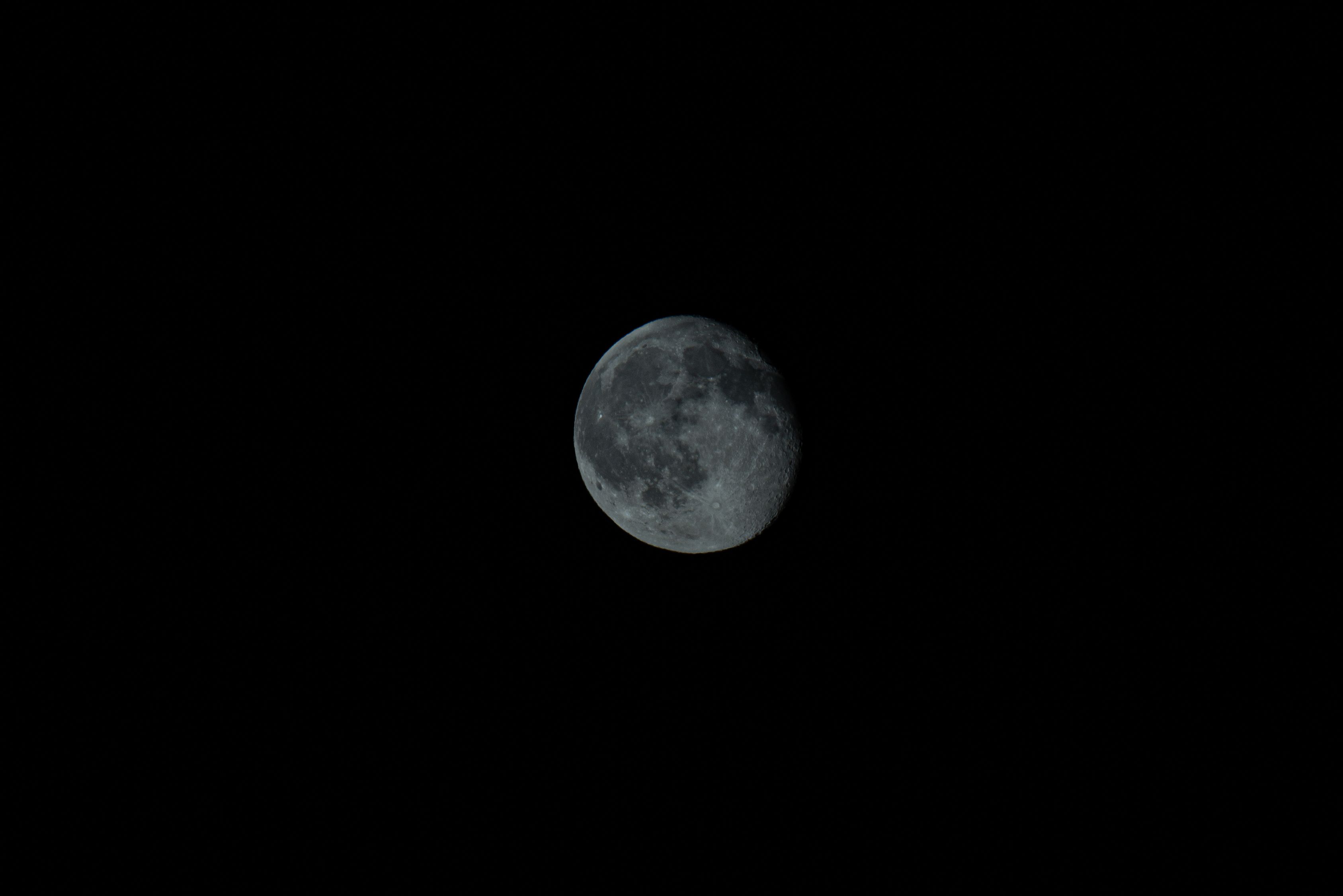
Title: When a Transit Becomes a Moment: A 1-Millisecond Window on the ISS Crossing the Moon
In the crowded sky above us, events unfold at tempos we rarely pause to measure. The sight of the International Space Station gliding across the face of a Moon is already a reminder of the scale and precision of human activity in orbit. But the particular recounting of a recent sighting—captured as a 1 millisecond exposure, stitched into a 100-frames-per-second replay, and refined through a careful chain of stacking and sharpening—offers a compelling case study in amateur astrophotography, orbital mechanics, and the practical art of turning fleeting moments into enduring images. It is also a reminder of how modern technology democratizes astronomy: with a capable telescope, a modest but well-chosen camera rig, and disciplined methodology, a single observer can reveal a transit that previously would have required large, specialized equipment or precise professional scheduling.
The challenge and the opportunity of a transit
The International Space Station is a spectacular object for observers on Earth precisely because it moves quickly and predictably enough to be observed from many locations. A transit across the Moon combines two kinds of motion that demand both timing and optics: the orbital plane of the ISS around Earth and the Moon’s own path around our planet. When those two motions converge so that the ISS passes in front of the Moon from an observer’s vantage point, the window of observation is brief, often fractions of a second. In this case, the window was merely a quarter of a second—an interval so short that capturing it demands a combination of high frame rate, short exposure, and careful post-processing.
The setup: choosing gear that honours the moment
What makes this particular capture instructive is not merely the final image but the precise chain of decisions that made it possible. The photographer’s toolkit—a Celestron 9.25-inch Schmidt-Caesar (C9.25) telescope paired with a high-sensitivity astrophotography camera (a ZWO ASI662MC) and filtered with IR685 and UV/IR cut optics—exemplifies a balanced approach to mobile, high-tempo planetary and lunar imaging. The choice of a 1-millisecond exposure is intentional: it freezes the motion of both the ISS and the Moon, reducing blur that would otherwise smear a transit across a few fractions of a second. The camera’s gain set to 300 acts as a form of light amplification appropriate to such short frames, while still preserving dynamic range for the bright instantaneous silhouette of the ISS against lunar surface detail.
From field logistics to orbital geometry
The author’s narrative of travel—discovering a precise alignment location 20 miles from home and then navigating a city to locate the exact vantage point—highlights two intertwined realities of amateur astrophotography: place and timing. The transit’s geometry is sensitive to the observer’s position on Earth. The ISS’s orbit is relatively low, roughly 400 kilometers up, which gives it a noticeable angular speed against the celestial backdrop. The Moon’s own motion, as it traverses its phase, adds another layer of complexity. The observer’s effective “camera shutter” must coincide with this confluence of movements at a precise line of sight, which is exactly what makes an event like this both difficult and deeply rewarding.
The workflow: from frames to finished image
The post-processing chain—Autostakkert, RegiStax 6, and Lightroom—reflects a practical, time-tested workflow for high-speed planetary imaging. The approach typically unfolds in stages:
- Data capture: a rapid sequence of frames (in this case, 100 frames per second) with an ultra-short exposure to minimize motion blur and sustain sharpness of the subjects against a relatively dark lunar backdrop.
- Stacking: stacking a subset of frames (they mention a lunar surface stack at 25% of 3,000 frames, which suggests a deliberate selection process to maximize signal-to-noise while preserving lunar detail) to improve the effective signal relative to noise.
- Alignment and sharpening: software such as RegiStax provides wavelet-based sharpening to bring out the surface features, while Autostakkert handles alignment across the frames to produce a coherent composite.
- Refinement and color grading: final touches in Lightroom enable balancing contrast, brightness, and color to present a faithful yet vivid rendition of the event.
This pipeline illustrates a practical principle: when time is your most scarce resource, you optimize data quantity (high frame rate) and quality (short, clean exposures) at the capture stage, then rely on iterative processing to recover detail that the raw frames alone cannot deliver.
The human dimension: patience, curiosity, and the iterative nature of discovery
A telling undercurrent in the narrative is the discipline involved in field observation. The photographer’s decision to drive around an entire city in search of the exact location underscores a core truth about observational astronomy: precision isn’t guaranteed by planning alone; it rests on a willingness to adjust, recalibrate, and persist. The moment of success—an alignment that persists long enough, even if for a fraction of a second—becomes a tangible reward for those degrees of uncertainty navigated in real time.
What this image teaches about observational practice
- Temporal resolution matters: The choice of 1 ms exposure translates to a counterintuitive principle: less light per frame can preserve sharpness when the subject is moving rapidly. The trick is to compensate with high frame rates to capture a sufficient number of usable frames.
- Alignment and timing are the bottlenecks: Even when the gear is capable, the observer’s ability to zero in on the precise transit alignment—driven by orbital predictions and local horizon conditions—can make or break the capture.
- Processing transforms noise into meaning: High-speed imaging produces a data-rich but noise-prone dataset. Stacking and selective frame inclusion are not “cheats” but essential steps to extract visibility of the transit against a lunar-filled field.
Broader implications: amateur astronomy in a landscape of increasing accessibility
This micro-lesson has wider resonance. The ability to pursue high-speed, high-precision astrophotography isn’t confined to well-funded observatories. Advances in consumer-grade astronomy cameras, modular optics, and accessible software empower a broader community to undertake ambitious imaging projects. The practice sits at the intersection of engineering, optics, and citizen science. Each successful capture contributes to a living archive of transient celestial choreography—moments that remind us that the sky is not a static canvas but a dynamic theatre where satellites, planets, and natural satellites perform in tight, orchestrated rhythms.
Practical guidance for enthusiasts seeking comparable results
- Plan around orbital data with a margin: Use a reliable ephemeris or a trusted satellite tracking app to forecast transit windows with uncertainty estimates for your exact observing location.
- Optimize exposure-timing balance: For rapid transits, start with sub-millisecond tests if your sensor supports it, then calibrate gain to preserve detail in both the moving object and the lunar surface.
- Stabilize the optical chain: Ensure robust mounting and minimal vibration. A well-balanced rig reduces the risk of micro-movements spoiling critical frames.
- Practice frame selection: Collect more frames than you think you’ll need and develop a repeatable, objective criterion for selecting frames for stacking—consistency in alignment, sharpness, and lunar surface visibility is key.
- Document the workflow: Record not just results but the sequence of decisions—the exact exposure, gain, filter configuration, stacking fractions, and processing steps. This helps others learn and provides a reproducible blueprint for future attempts.
Beyond one moment: living with uncertainty in astronomy
The article’s understated drama—the detour across Everett, the moment of alignment, and the final image built from nearly instantaneous light—reflects a broader truth about observational science. Many notable discoveries begin as brief glimpses, partial data, or imperfect measurements. What matters is how researchers and enthusiasts translate those fragments into reliable, communicable knowledge. In the realm of astrophotography, this means acknowledging the limits of one shot: a single transit is a piece of a larger mosaic, useful for calibration, practice, and inspiration, but most valuable when it sparks further observation, refinement, and inquiry.
Conclusion: a moment captured, a method reinforced
What emerges from this account is more than a striking image of the ISS crossing the Moon. It is a disciplined demonstration of how modern amateur observers can push the boundaries of what’s possible with accessible gear and a careful, iterative workflow. The quarter-second transit is a powerful reminder: with the right combination of timing, equipment, and processing discipline, fleeting cosmic performances can be captured, studied, and shared. For fellow observers, it reinforces a practical ethos—question assumptions, chase precise alignments, plan for contingencies, and leverage the full potential of your toolkit to turn a momentary glint in the sky into a lasting record of human curiosity in motion.