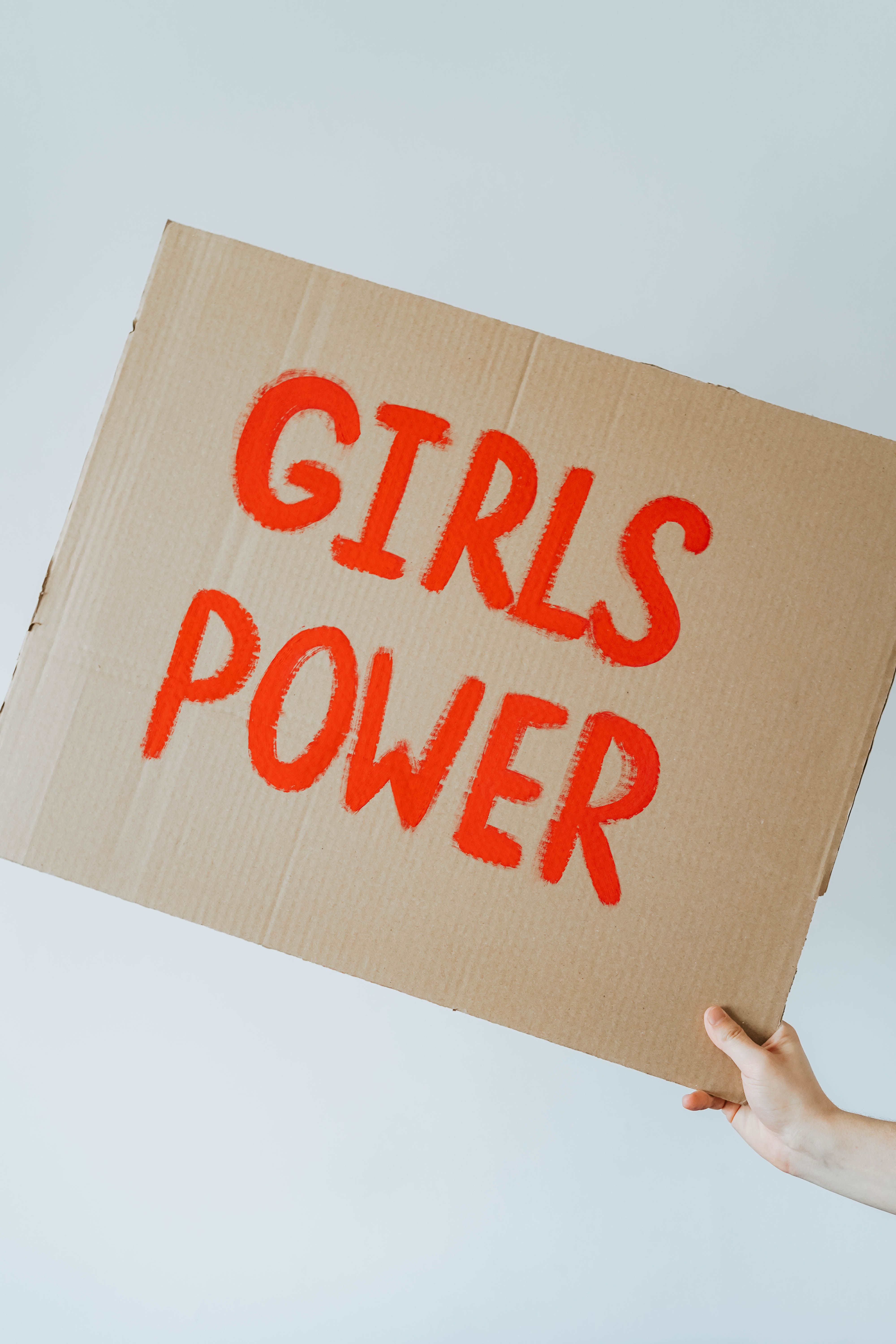
Astrology and the Politics of Power: Reframing How We Talk About Strength, Gender, and the Horoscope
Astrology thrives on narratives. It maps human temperament into planets, signs, and aspects, offering a symbolic language through which people can understand desire, conflict, and growth. But when that language becomes repetitive or gendered—when strong Mars- and Sun-driven qualities are routinely tethered to male energy while female subjects are cast as reflections or counterpoints to male archetypes—the conversation stops serving those it purports to illuminate. The Reddit post at hand lays bare a recurrent, uncomfortable friction: the way certain astrology discourse assigns power, agency, and identity along gendered lines, often to the detriment of the very readers who most naturally recognize themselves in the charts.
In this article, I want to move beyond the surface complaint and explore how astrology’s habitual gender coding can distort meaning, marginalize lived experience, and misfire as practical guidance. I’ll offer a framework for thinking about strength and sovereignty in astrological practice that is less about fitting people into categories and more about honoring the complexity of individual charts across gender, sexuality, culture, and personal history. Along the way, I’ll ground the discussion in concrete examples, address common misinterpretations, and sketch actionable practices readers can use to cultivate a more nuanced, empowering astrology.
1) The problem: power described as “masculine” and deconstructed for women
What the Reddit post reveals is not just a personal preference but a structural pattern. When Mars, the Sun, or Pluto is highlighted as a source of strength, the accompanying caveat—“for male natives…” or “as for female natives,…”—reframes the chart through a gendered lens. This bifurcation does two things at once:
- It reinforces a false dichotomy between masculine power and feminine passivity, implying that women must rely on relational or external validation (a partner, a male archetype) to realize the assertive potential encoded in their own birth chart.
- It reduces a person’s full astrological signature to a lack or absence of a supposed male stand-in, thereby naturalizing a social script that the chart should transcend.
The consequence is a double bind: readers with “robust” Mars/Sun/Pluto configurations feel their autonomy is safe only insofar as they acknowledge a male reference point; readers who identify as non-male or who inhabit non-normative power dynamics may find the “strong woman” storyline either aspirational in a narrow sense or alienating if the language feels performative rather than grounded in lived experience.
2) Reframing strength: from archetypes to capacities, beyond gender
A more useful approach treats planetary configurations as capacious tendencies rather than scripts tethered to gender. Consider these reframings:
- Mars as propulsion, not aggression. Mars can indicate energy, initiative, and the capacity to act under pressure. Its strength lies in momentum, boundary-setting, and the courage to begin, not in domination or forcefulness as a gendered norm.
- Pluto as transformation, not brutality. Pluto’s signature is depth, regeneration, and the insistence that endings make room for new beginnings. Its power is the willingness to confront taboo, to dissolve what no longer serves, and to endure the discomfort of growth.
- Sun as core identity, not ego unchecked. The Sun emphasizes self-definition, purpose, and visibility. Strength emerges from alignment between inner values and outward expression, not from conquest or overt dominance.
- Saturn as structure, not punishment. Saturn’s challenge is building durable forms—habits, commitments, disciplines—that endure. Its power is steadiness, responsibility, and the ability to bear consequences with clarity and resilience.
If we pivot away from gendered qualifiers and toward these neutral capacities, the chart becomes a map of someone’s available energies—how they can act, resist, endure, and evolve—rather than a collection of oddly gendered constraints.
3) The social life of astrological language: avoiding essentialism and stereotyping
Astrology does not live in a vacuum. It exists within a cultural ecosystem that uses gendered language and social expectations to interpret behavior. This is why “strong female” descriptions can feel discounted or undermined when they require a male counterpoint to validate them. A healthier lexicon acknowledges:
- Intersectionality: power in a chart is mediated by race, culture, class, sexuality, and personal history. A Mars-Pluto conjunction in a chart built around advocacy, activism, or survival may function differently for someone navigating systemic barriers than for someone in a more privileged position.
- Personal history: early life experiences, relational patterns, and trauma histories shape how planetary energies manifest. The same Mars aspect can express as assertive leadership in one life and guarded defensiveness in another.
- Contextual nuance: social expectations about “appropriate” expressions of power shift over time. The way we talk about authority in astrology should reflect these shifts rather than anchor readers to outdated stereotypes.
4) Real-world clarity: moving from reading to guidance
To translate the analytic frame into practical value, we can approach chart-reading with a few concrete moves:
- Start with the person, not the archetype. When a Mars conjunction to Pluto appears, ask: How does this person experience intensity? In what contexts do they channel it constructively? Where does it backfire? What boundaries are needed for sustainable energy?
- Explore relational mythologies without prescriptive gender roles. If a reading mentions “male energy” as a reference point, reframe it as an influence pattern: external sources of force, authority figures, or power dynamics in relationships. Ask how the querent negotiates power with others, regardless of gender.
- Emphasize agency over fate. Highlight choices—habits, communication style, boundary-setting, and learning—through which the chart’s energies can be harnessed ethically and effectively.
- Provide practical exercises. For example:
- Energy mapping: Track moments when Mars-driven impulses arise during the week. Note outcomes, feelings, and adjustments that helped or hindered progress.
- Boundaries audit: List areas where Pluto’s transformational drive is strongest. Identify boundaries that protect long-term goals without stifling healthy change.
- Purpose alignment: When the Sun’s power is engaged, articulate a personal mission statement for the next six months and schedule regular check-ins to assess alignment.
5) Case-in-point: a constructive way to interpret the original configurations
Let’s consider a hypothetical chart with Mars conjunct Pluto, Mars opposite Saturn, Saturn opposite Pluto, Sun conjunct Uranus, Sun trine Saturn, and Sun parallel Pluto. Without gender qualifiers, what might this configuration suggest?
- Core energy: A person with intense focus, capable of radical transformation. There is a drive to break old patterns and to rebuild on sturdier foundations.
- Tension points: The Mars-Pluto combination can foment power struggles or a need to control outcomes. The Mars-Saturn opposition adds caution, structure, and sometimes impatience with delays. The Pluto-Saturn tension emphasizes cycles of renewal versus constraint.
- Identity and innovation: Sun-Uranus suggests a restless need for authenticity, novelty, and unconventional approaches. While this can be electrifying, it may also collide with Saturn’s demand for reliability.
- Integration path: The individual benefits from intentionally choreographing their energy—setting clear milestones, embracing calculated risks, and cultivating a style of leadership that blends courage with accountability.
In a gender-neutral framing, the story becomes less about “these attributes exist in men and women differently” and more about how someone with this set of energies learns to harness power responsibly, communicate boundaries, and translate internal motivation into outcomes that serve their values.
6) The horizon: what modern astrology can and should do
- Normalize multiplicity: Strength is not a single polarity. A chart can house tenderness alongside ferocity, vulnerability alongside decisive action, improvisation alongside ritual discipline.
- Elevate ethical considerations: When power is strong, the ethical dimension becomes crucial. How does this person use influence? What safeguards ensure their strength benefits others or at least minimizes harm?
- Embrace diverse navigations of power: Gender and sexual identity should not restrict the range of acceptable expressions. Some readers may resonate with gendered metaphors, others may not; either way, the interpretive frame should be able to accommodate variance without collapsing into reductive stereotypes.
- Encourage reflective practice: Readers should be invited to examine not only what their chart says about them but how they want to grow. Astrology can be a tool for intentional self-governance, not a justification for entrenched social norms.
7) A closing thought: astrology as a curriculum for sovereignty
The point of astrology—when wielded with intellectual honesty and ethical care—is not to dictate who you are but to illuminate pathways for becoming who you want to be. When the language of power is tethered to gender, the map becomes a gatekeeper: it tells some people they may wield strength, and others that strength must be deferred. An evolved practice, by contrast, treats power as an instrument available to all who cultivate discipline, awareness, and responsibility.
If you leave with one practical takeaway from this discussion, let it be this: reframe your reading from a gendered script into a personal inventory of capacities. Ask not, “What does this say about men and women?” but, “What does this configuration enable me to do with intention, integrity, and care?” In doing so, astrology returns to its most emancipatory function: a compass that helps each of us navigate the complexities of power, identity, and growth on our own terms.