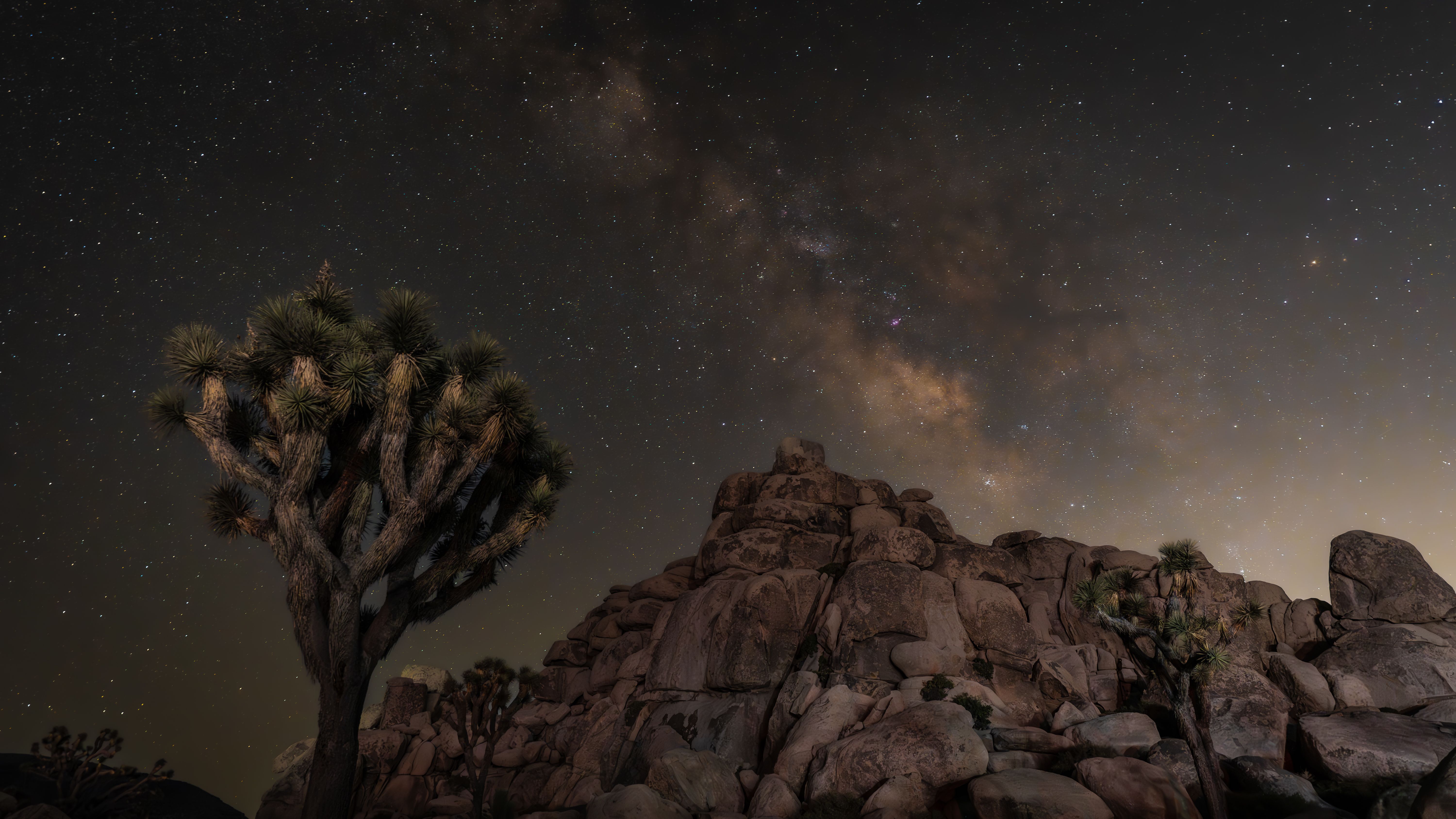
Milky Way Rising Over Mono Lake’s Tufa Towers: A Visual Essay on Landscape, Light, and Geological Time
On the desolate shores near Mono Lake in California, a delicate drama unfolds each clear night. Between the waterline and the night sky, cream-colored towers rise in silent testimony to a process as ancient as the lake itself: tufas, limestone sculptures born of mineral alchemy, standing as sentinels while the Milky Way unfurls above them. This is not merely a photograph; it is a convergence of geology, astronomy and human perception—a reminder that the natural world writes its own narratives in stone and starlight, if we learn to read them.
The making of a tufa landscape
To begin with, the tufas are not “rocks” in the casual sense. They are freshwater limestone structures that grow where mineral-rich springs vent into the alkaline lake. Calcium salts merge with carbonate ions in the lake water, precipitating out as limestone and gradually constructing vertical spires, columns and-pillars. This geological choreography unfolds over hundreds to thousands of years, with each tower encoding a history of hydrology, chemistry, and climate.
Mono Lake’s tufas emerged under particular conditions. The lake’s exceptional salinity and alkalinity, combined with persistent spring discharges, created a chemical playground where calcium and carbonate could crystallize, forming solid, enduring silhouettes. As the lake level fluctuates, sometimes dropping in response to climatic shifts or water diversions, the once-submerged spires become exposed, offering new canvases for land- and sky-scapes. The result is a landscape that looks almost otherworldly: pale, sculptural towers in stark contrast with deep blue horizons and the darker silhouettes of surrounding mountains.
Photographic opportunities and the science of light
What elevates the Mono Lake tufas from geological curiosity to a magnet for night photography is the way they frame celestial phenomena. When the Milky Way arcs overhead, the towers act as terrestrial anchors—a vertical rhythm that guides the eye through the spine of the galaxy. The composition invites a particular kind of wonder: the idea that the ground beneath our feet has a patient history that spans eons, while above us, the Milky Way replays a cosmic performance that is both ancient and immediate.
To translate this scene into an image, exposure and timing matter as much as the stone itself. The photographer’s approach often involves a two-step strategy: a long-exposure capture of the sky to reveal the Milky Way’s detail and luminosity, paired with a shorter exposure for the foreground to retain texture, color and depth. The specific settings—an extended exposure for the sky and a shorter, brighter foreground shot—are a practical acknowledgment of the dynamic range between a night sky saturated with starlight and a terrestrial foreground that requires careful illumination.
Real-world practice: a practical workflow
- Sky capture: A wide aperture and steady tracking can reveal the Milky Way’s structure as it traverses the heavens. The juxtaposition of the Milky Way’s galactic core with the verticality of the tufas can be particularly striking when the sky is at its clearest, typically in the late-night hours following astronomical twilight.
- Foreground handling: The lower portion of the frame benefits from a separate exposure to preserve the texture and color of the tufas and the surrounding landscape. This prevents the foreground from appearing either underexposed or washed out when the sky is bright with stars.
- Blending and tonality: Merging exposures or using layer-based tone-mapping allows for balance between the celestial and terrestrial elements. Subtle color grading can emphasize the cream-hued limestone against the deep indigo of night and the faint glow of the Milky Way.
Aesthetics, ethics and the ecology of the place
The power of a photo like this rests not only on technical proficiency but on respect for the ecological and cultural context. Mono Lake’s tufas are fragile, particularly in light of hydrological management and climate variability. Responsible travel and photography demand mindful access: minimizing disturbance to wildlife, avoiding sensitive nesting sites, and adhering to park rules and seasonal restrictions. The best images emerge when the photographer practices restraint—allowing the landscape’s time to shape the moment rather than forcing a sensational shot.
The Milky Way as a lens on modern life
This scene invites broader reflection. The Milky Way’s prominence in an image anchored by delicate limestone towers is a reminder of scale: galaxies and stone are measured in terms of time and endurance, while human perception is a fleeting instantaneous moment. The juxtaposition invites readers to consider what “timeless” means in a world of rapid change—climate, water politics, and land management all intersect with how and where we experience the night sky.
Historical and cultural resonance
Monumental geological features have long captivated cultures, serving as navigational aids, sacred sites, or sources of local lore. The tufas are a modern kind of monument—an archive of mineral deposition and water chemistry rather than written or carved history. They prompt us to think about the human impulse to seek permanence in impermanent landscapes, and how photography can both capture and communicate that paradox to audiences far from the site itself.
Technical considerations for enthusiasts and professionals
- Equipment choices: A wide-angle or standard zoom paired with a sturdy tripod is a practical foundation for this genre, enabling expansive sky coverage while maintaining a grounded, legible foreground. A tracking mount can help achieve crisper star trails or stable star fields during longer exposures, depending on the desired effect.
- Sensor and lens performance: Low-light performance is critical, particularly in reducing noise during extended sky exposures. Lens sharpness and color rendition influence how the tufas’ texture is perceived against the Milky Way’s glow.
- Post-processing philosophy: The aim should be to preserve natural color and contrast while conveying depth and dimensionality. Subtle dodging and burning for foreground texture and restrained color balancing preserve the scene’s authenticity and avoid over-saturation.
The present moment: why this subject speaks now
In an era when the night sky is increasingly threatened by light pollution and illuminated development, images that celebrate genuine darkness and celestial clarity carry a particular urgency. They remind viewers of what is still possible when science, stewardship and artistry converge. The Mono Lake tufas, viewed under a rising Milky Way, become a compelling case study in how natural history and human curiosity can coalesce into a single moment of reflection and wonder.
What to take away: practical wisdom for readers and photographers
- Seek places where geology and astronomy intersect: The most compelling shots arise when the landscape itself participates in the scene, not merely as a backdrop.
- Respect and protect the site: Plan visits with awareness of wildlife, seasonal restrictions, and environmental impact. Photographers have a responsibility to preserve the very vistas that inspire their work.
- Balance technique with restraint: The best night-sky images emerge from a thoughtful balance between sky and foreground exposure, careful composition, and subtle processing that honours the scene’s natural beauty.
- Context enriches perception: Understanding the tufas’ formation adds a meaningful layer to the viewing experience, transforming a postcard moment into a narrative about earth’s processes over millennia.
A closing thought
The Milky Way’s arch over Mono Lake’s tufa towers is more than a pretty intersection of sky and stone. It is a dialogue across time—where a mineral society, slowly built over eons, meets a cosmic spectacle that unfolds in minutes. For viewers and photographers alike, the scene invites a disciplined sense of wonder: to look closely, to listen to the science behind the beauty, and to leave the place as one would wish to find it—intact, unhurried, and radiant under a truly dark sky.