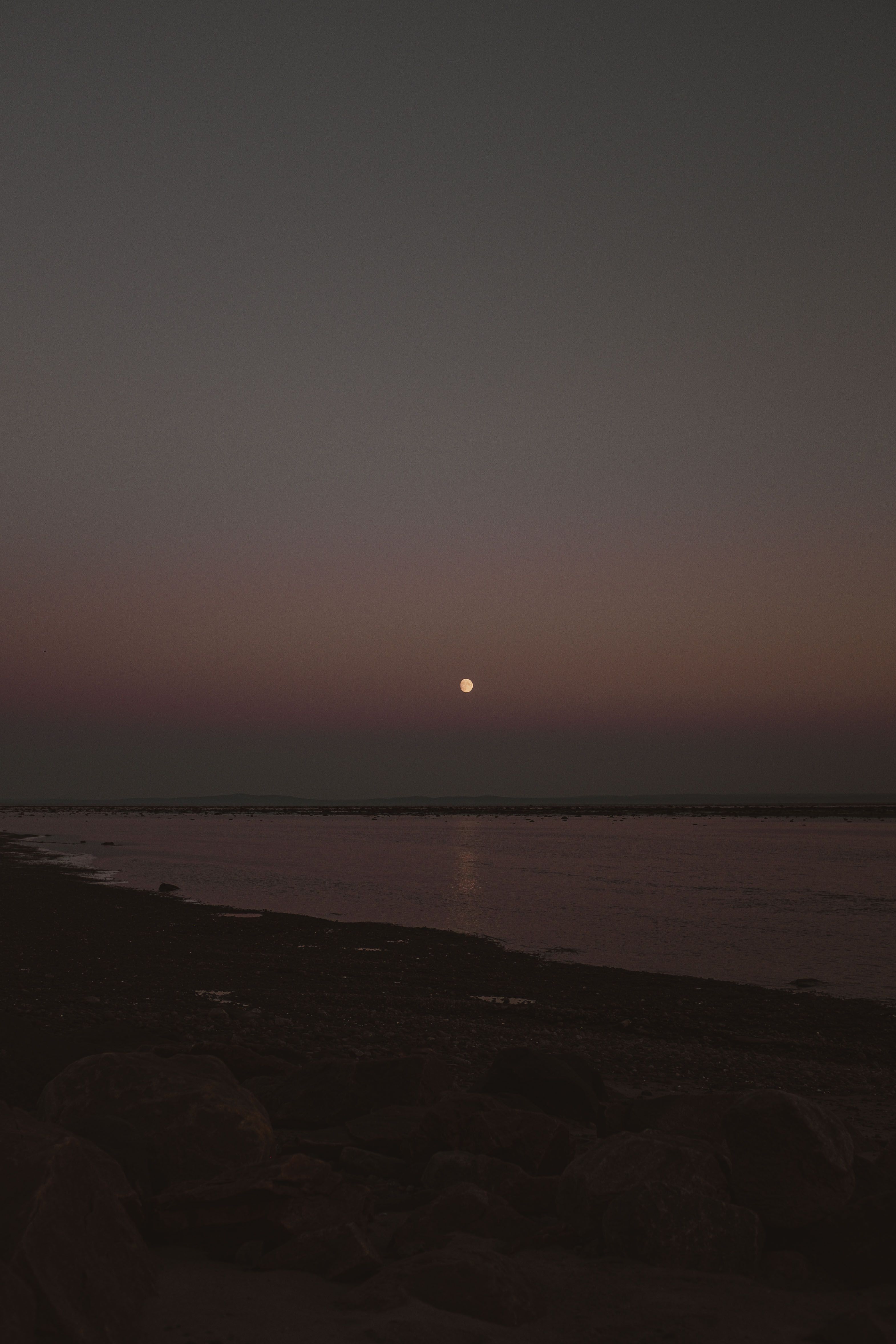
Moonset Over the Atlantic: A Case for Imperfect Perfection in Night Photography
Few scenes crystallize the relationship between nature’s grandeur and human infrastructure as vividly as a moonset along a moonlit shore. The original Reddit post—an evening walk with the Atlantic as backdrop, streetlamps painting the waves in an artificial glow, and a camera capturing the moment—reads like a quiet manifesto: perfection is not the absence of flaws, but the harmonious tension between them. This article uses that modest, intimate vignette as a springboard to explore how night photography can reveal truth about place, mood, and technique when we lean into the imperfect details rather than fight them.
Why a Moonset Matters in a Sea-Side Landscape
The moon’s journey from full glow to shadowed sliver is not merely a celestial event; it’s a dramaturgy of light. In coastal photography, the moon can function as both muse and foil. It guides exposure, informs color temperature, and invites a particular rhythm to a scene: a slow, contemplative pace rather than a documentary sprint. The Atlantic, with its constant motion and reflective surface, offers a canvas where the lunar luminance interacts with water, sand, and man-made lighting. The result is never a single “perfect” frame; it’s a sequence of moments where light, texture, and atmosphere negotiate with each other.
From the Streetlamp to the Sea: The Unintended Aesthetic
Streetlamps along a shore are not conventionally considered ideal for photography at night. They introduce warmth or coolness depending on their bulbs, cast halos on wet surfaces, and create artificial pockets of brightness against a landscape that might otherwise be dominated by cooler, lunar tones. Yet this juxtaposition can be precisely the point. The glow from streetlamps can:
- Add a foreground anchor, drawing the viewer’s eye through the frame and providing a sense of place.
- Create color contrast with moonlight, enriching the scene’s palette.
- Introduce intentional grain, bloom, or flare that lends texture and an unmistakable human signature to a natural scene.
In this sense, the “imperfect” detail—the urban glow—becomes a narrative device rather than a distraction. It tells the viewer: I was here, at a specific moment, under live conditions where nature and city coexisted on the same horizon.
Technical Considerations: Interpreting the Settings
The original post specifies a Sony A7 III, 15 seconds, ISO 1000, with color grading in Lightroom. Those choices offer a practical blueprint for translating mood into measurable parameters while still leaving space for creative interpretation. Here’s how to think about them, and what alternatives might yield:
- Exposure time (15 seconds): A long exposure like 15 seconds can smooth water movements, granting the sea a glassy, almost velvety texture. It also amplifies any motion in clouds and helps incorporate more ambient light, including moon reflection off the water. If the goal is to emphasize texture in the waves, a shorter exposure (1–4 seconds) could preserve more detail in spray and foam, while still benefitting from the moon’s glow. In low light, bracketed shots or multiple frames blended in post can balance smooth water with sharp detail.
- ISO (1000): This is a balanced choice for night landscapes on many full-frame bodies, providing sensitivity to subtle light without overwhelming noise floors. The A7 III handles such ISO reasonably well, but grain can become a feature rather than a flaw if pushed too far. When the scene has strong artificial lighting, lower ISO in combination with longer exposure can reduce noise and retain more dynamic range.
- Colour and mood: Color grading is where perceptible mood shifts occur. In a moonlit coastal scene, you might explore a cooler palette—deep indigo skies, slate blues of the water, and a restrained amber from streetlights—to reinforce the emotional temperature of the moment. Alternatively, a warmer tilt can evoke a nostalgic or cinematic feel, but it risks sacrificing the naturalistic tension between moon and lamp light. The key is to think in terms of color harmony: how do the lights, the night, and the water converse with each other?
The Aesthetics of Imperfection: Light, Texture, and Rhythm
A compelling night photograph rarely hinges on technical perfection alone. It depends on a triad of light, texture, and rhythm:
- Light: Moonlight is cool and directional; streetlamp light is warm and diffuse. The coexistence of both creates a dynamic tonal range. Pay attention to how reflections on the water align with the horizon and how the shore’s wet surface catches stray highlights.
- Texture: The sea, sand, and built environment offer texture that responds differently to exposure. A longer exposure can emphasize the sea’s motion, while a shorter one can freeze a stray wave, creating a micro-drama within the frame.
- Rhythm: The timing of the moonrise or moonset, the ebb and flow of the tide, and the cadence of ambient city light all contribute to a sense of tempo. A successful night shot often feels like a small performance you witnessed, not a single snapshot.
Crafting a Narrative: Edges, Boundaries, and the Sea’s Silence
Photography is a storytelling medium. A moonset over the Atlantic is inherently about boundaries—the edge between sea and sky, the city’s glow versus the night’s darkness, and the moment when day transitions into something almost ceremonial. The “imperfect details”—the streetlamp’s halo, a cloud’s silhouette against the moon, the faint silhouettes of distant piers—are not flaws but punctuation marks in a quiet sentence: life persists at the boundary.
Practical Wisdom: Field Practices for Night Coastal Photography
- Scout and plan: Arrive early to understand how the scene evolves with the moon’s trajectory and the tide’s rhythm. Note where artificial light leaks into the frame and how it interacts with natural luminance.
- Use a sturdy foundation: A tripod is essential. Coastal winds can be unpredictable; a weight or clamp can help stabilize the rig on uneven shorelines.
- Protect your gear: Salt spray and humidity are adversaries of image quality and equipment longevity. Use a lens hood, shielded mounting, and care after shoot to wipe salt residues.
- Bracket for balance: When possible, shoot a set of frames at different exposures. Later HDR or exposure fusion can yield a broader tonal range that respects both the moon’s brightness and the artificial lighting’s warmth.
- Post with intention: Color grading should serve the scene’s mood rather than chase artificial perfection. Subtle local adjustments—softened highlights on the water, gentle desaturation in the shadows, a touch of warmth in the foreground lamp glow—can cohere into a unified aesthetic.
Historical and Contemporary Context: The Photography of Night and Coastlines
Coastal night photography has evolved with camera sensors and lightweight stabilization. The era of mirrorless cameras and high-ISO performance has democratized what was once the province of specialists who depended on heavy gear and meticulous light rigs. Yet the enduring value remains not in technical prowess alone, but in the ability to translate a fleeting moment into a tangible memory that resonates with viewers. The moonlit shore, as captured or imagined, is less a technical feat and more a meditation on time, place, and human perception.
What to Do Now: A Toolkit for Enthusiasts and Ambitious Amateurs
- Build a tiny night-shoot kit: a lightweight tripodable setup, a remote shutter release or intervalometer, a lens with a modest focal length for broad coastal scenes, and a basic plan for camera settings based on typical moonlight intensities.
- Practice with deliberate imperfection: Embrace the glow of artificial lighting as a design element, not a distraction. Experiment with different white balance presets to see how the scene’s emotional copper tones shift.
- Develop a personal shooting cadence: Decide whether you want your coastal moonshots to lean into serene minimalism or to capture the kinetic tension between sea and streetlight. Your personal signature will emerge from consistency of approach and sensitivity to mood.
Ethical and Environmental Considerations
Night photography on public coastal spaces should respect local regulations, wildlife, and other visitors. The moon’s quiet beauty invites contemplation; introducing intrusive flashes or disruptive gear can detract from the moment for others and potentially disturb nocturnal wildlife. Cull the temptation to maximize sensationalism in favor of a thoughtful, respectful representation of the scene.
A Concluding Perspective: The Value of Imperfect Perfection
The original post’s essence—“perfection is in imperfect details”—speaks to a broader truth about photography and our relationship with the natural world. The moonset is a reminder that beauty often lies not in pristine surfaces but in the honest entanglement of light, material, and atmosphere. The streetlamp’s glow, the wave’s whisper, the horizon’s quiet edge—all merge into a single, imperfect, human moment that invites viewers to pause, reflect, and feel something true.
If you’re inspired to chase this kind of image, treat the imperfect glow as a feature, not a flaw. Seek moments where the city and sea converse in dim gold and cold blue. Let the settings be your guide, but let the scene dictate your emotion. In the end, that’s what makes a moonset photograph endure: not a flawless technical render, but a meaningful, lived-in moment captured with intention and care.