Dark Spot on Jupiter: Beyond a Vivid Anomaly to a Moment that Tests Planetary Observation
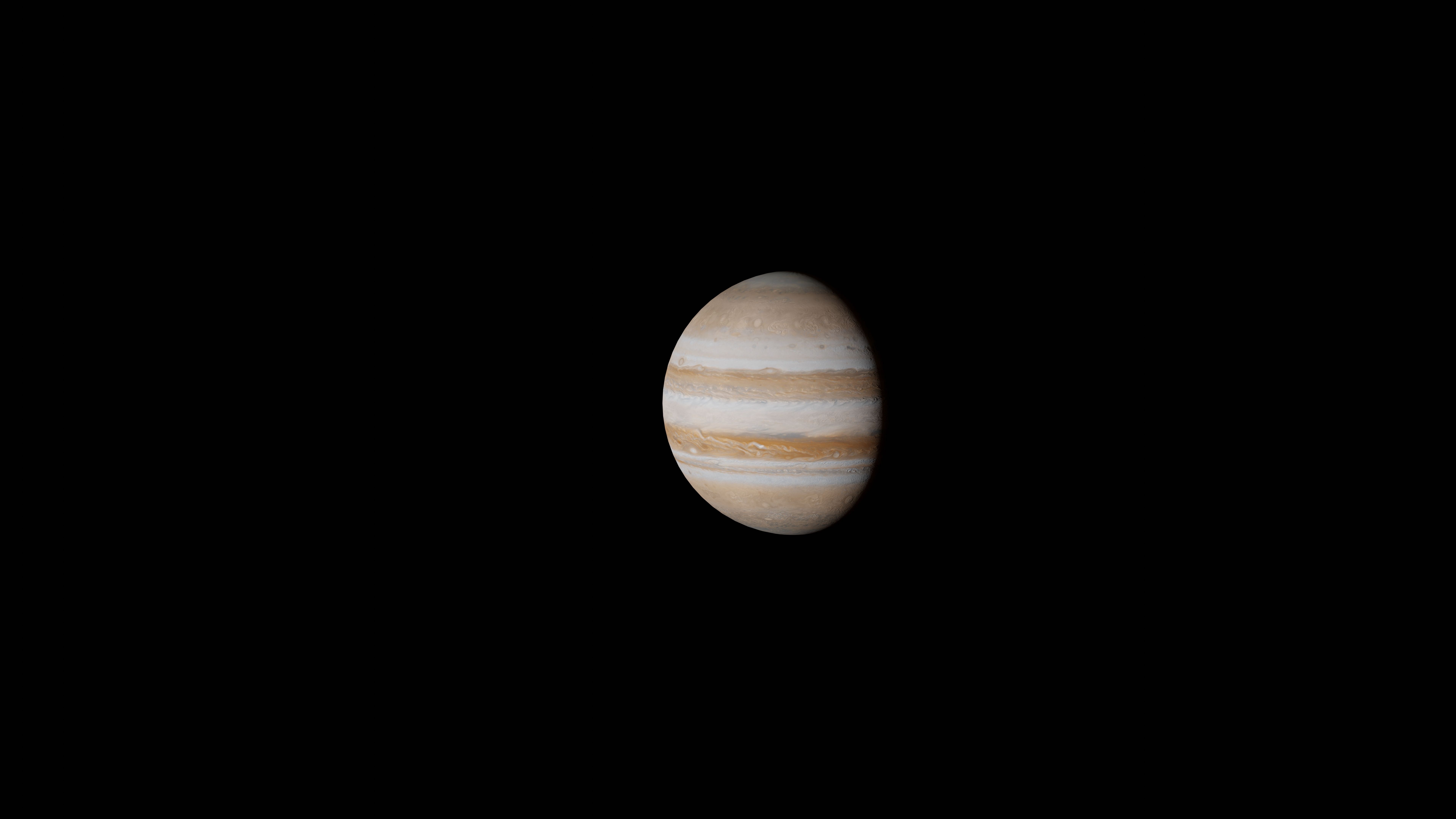
On a quiet April afternoon in 2026, an elongated dark feature appeared in Jupiter’s swirling atmosphere, registered by professional observatories and amateur networks alike. The initial spark of attention — a spot unlike the familiar bruises and storms that populate the gas giant’s bands — raised a cascade of questions: Is this a transient weather pattern, a shadow cast by high-altitude clouds, or something more dramatic, such as an impact event? The discussion has since evolved into a careful examination of data quality, timing, and the broader implications for planetary science and observational astronomy. This is not merely a note about a curious apparition; it is a reminder of how contemporary astronomy fuses rapid data collection, collaborative verification, and disciplined caution when confronting potentially transformative discoveries.
A genuine moment in a long history of Jupiter observations
Jupiter’s atmosphere has long been a proving ground for the limits of human observation. Its belts and zones form a dynamic laboratory where storms can grow quickly, drift across latitudes, and dissipate with little warning. The 1994 Shoemaker-Levy 9 impacts, the continuing fascination with the Great Red Spot’s stability, and the frequent discoveries of new storms have trained astronomers to interpret oddities with both excitement and restraint. The April 2026 report about an elongated dark spot — potentially the signature of an object larger than 100 meters colliding with the planet — sits at this intersection of expectation and caution.
What makes the report compelling
-
Elongation and darkness: An elongated feature can arise from several phenomena. A genuine atmospheric impact site often appears as a dark, complex imprint caused by material excavated from Jupiter’s upper atmosphere or subsurface layers. The contrast against the bright bands and the potential turbulence at the collision region can yield a shape that, at first glance, reads as elongated. The timing and morphology invite it to be scrutinized as a possible oblique impact or a different atmospheric disturbance.
-
Temporal anchoring: The event was observed as a point in time and then scheduled for follow-up as the planet rotated, bringing the region back into Earth’s line of sight. This cadence is routine for planetary observers who track Jupiter’s rotation period (~9.9 hours) to re-image distinctive features and track their evolution. The capability to re-acquire data as the region becomes observable again is essential to confirm persistence, evolution, or dissipation of any feature.
-
Independent corroboration: The discovery credited observers Alexander Frantzis and Marc Delcroix—names associated with credible, sustained contributions to planetary imaging—signals that the initial detection emerged from disciplined observational practice, not rumor. In planetary science, independent confirmation from multiple facilities is crucial for extraordinary claims.
Why skeptics are essential in this story
No robust scientific conclusion rests on a single observation, particularly when the feature could be an artifact of imaging, processing, or atmospheric perspective. The potential sources of misinterpretation include:
-
Image processing artifacts: High-contrast features can be introduced by contrast stretching, sharpening, or deconvolution techniques, especially when atmospheric seeing is variable or the data come from diverse imaging systems with different resolutions and sensor characteristics. Observers must test whether the feature persists across independent pipelines and instruments.
-
Spurious localities: Jupiter’s complex cloudscape contains shadows, limb foreshortening effects, and projection artifacts that can mimic elongated shapes when the planet’s limb is near the edge of the field of view or when the viewing geometry is unusual.
-
Atmospheric dynamics versus impact scars: Jupiter’s atmospheric phenomena can be dramatic and swift. A long-lasting scar from a rapid impact may resemble a dark mark, but similar patterns can also arise from vortices, atmospheric plumes, or elongated weather streaks evolving under convective forces.
Grounding the claim in rigorous methods
The path from a striking image to a scientifically robust conclusion typically unfolds through several critical steps:
1) Verification across instruments: A true planetary event of considerable magnitude should imprint consistently across different telescopes, wavelengths, and imaging modalities. From infrared to visible light, the spectral footprint can reveal whether the feature is a shallow atmospheric perturbation, a shadow, or a material deposit with distinct absorption characteristics.
2) Temporal evolution: A collision imprint might evolve over hours to days as ejecta disperses, while atmospheric features can stretch, rotate, or dissipate due to wind shear and convection. Observations timed to Jupiter’s rotation and weather cycle help map this evolution.
3) Quantitative characterization: Measurements of size, aspect ratio, brightness contrast, and position relative to known reference features (like the Great Red Spot or a specific jet stream) provide a numeric foothold. When the estimate suggests an object larger than 100 meters, it anchors the discussion in a scale that resonates with impactor studies and planetary defense analogies.
4) Context with prior events: Comparing with historical impact signatures, such as Shoemaker-Levy 9 fragments, can illuminate whether the observed feature aligns with known impactology (evidence of ejecta, secondary craters, luminosity evolution) or diverges toward atmospheric processes.
What a careful observer would be looking for next
-
Independent follow-up images: Secure corroboration from telescopes across continents and, when possible, from space-based instruments or missions with different viewing geometries. A multi-wavelength approach would help distinguish between dark material and shadow effects.
-
Spectroscopic fingerprints: If feasible, spectroscopy could reveal the chemical or mineralogical signatures associated with an impact plume or atmospheric mixing. Absorption bands corresponding to ices, hydrocarbons, or silicates could provide decisive clues about the feature’s origin.
-
Polarimetric data: Polarization measurements can differentiate between reflective cloud particles and darker, absorbing surfaces, offering another angle on the feature’s nature.
-
Consistency with orbital dynamics: If the feature is the residual of an impact, its location should align with an impact geometry. A precise epicenter, when traced across multiple rotations, could constrain the trajectory and help model the event with greater fidelity.
Broader implications for planetary science and observational culture
1) Advancements in planetary impact studies: A confirmed sub-kilometer (100 meters-scale) impact on Jupiter would refine our understanding of the flux of small bodies in the outer solar system and the atmospheric response of gas giants. It would add a data point to models of atmospheric mixing, debris deposition, and the detectability of impact scars in different spectral bands.
2) The value of collaborative astronomy: Jupiter events are a proving ground for collaborative infrastructure. The news cycle surrounding an potentially consequential event underscores the importance of standardized data sharing, cross-instrument verification, and transparent uncertainty delineation. It’s a reminder that the fastest signal is not always the most reliable until filtered through rigorous analysis.
3) Public engagement and scientific literacy: Dramatic features can captivate public imagination. The challenge for the scientific community is to communicate the provisional nature of early findings without dampening curiosity. Clear updates, explicit caveats, and a narrative that tracks the evidence as it evolves help maintain trust and foster a broader appreciation for how science progresses.
The present moment: cautious optimism, disciplined caution
As of the initial report, astronomers prepared to observe as Jupiter rotated into a vantage favorable for Earth-based follow-up, with the expectation that the region would once again present itself for imaging after roughly a Jovian day. This strategic timing is a hallmark of responsible planetary observation: announce the anomaly, outline a plan for verification, and proceed with humility about what the data can—and cannot—conclude at each step.
What readers should take away
-
Treat initial detections as hypotheses, not conclusions. Extraordinary claims demand extraordinary evidence, but they also reward prompt, structured inquiry.
-
Appreciate the testing ground that Jupiter provides for observational science. A potential impact signature is not only about a single dark patch; it is a test case for instrument cross-validation, data processing integrity, and the disciplined sequencing of observations.
-
Recognize the importance of transparency in uncertainty. The value of the report lies not only in what is observed but in how the community communicates the confidence level, potential alternative explanations, and the plan to resolve ambiguities.
If you’re following along or peering through your own telescope, you’re participating in a long-standing human practice: to turn a fleeting pattern in a distant world into knowledge about our own. Whether the dark elongated feature proves to be the scar of an interplanetary visitor or a dramatic atmospheric phenomenon, the process—careful measurement, collaborative verification, and measured interpretation—will extend our understanding of Jupiter and sharpen our approach to observing the cosmos.
In the days ahead, as new images arrive and wavelengths are broadened, the debate will mature from “what could this be?” to “what does this tell us about Jupiter’s atmosphere, about impact probabilities in the solar system, and about how we, as a global community of observers, discern signal from noise?” Until then, the phenomenon remains a compelling moment in the ongoing dialogue between observation, interpretation, and the relentless curiosity that drives science forward.